The Memoir
Memoir of the Century: Topolski's Panorama Under Hungerford Bridge
Memoir of the Century is the long painted panorama Feliks Topolski made beneath the arches of Hungerford Bridge. This page explains what it shows, how it was made and where the chapter series on this site fits.
Festival of Britain dates, the 2006 condition report and the 2009 restoration checked on
The chapters
-
-
-
-
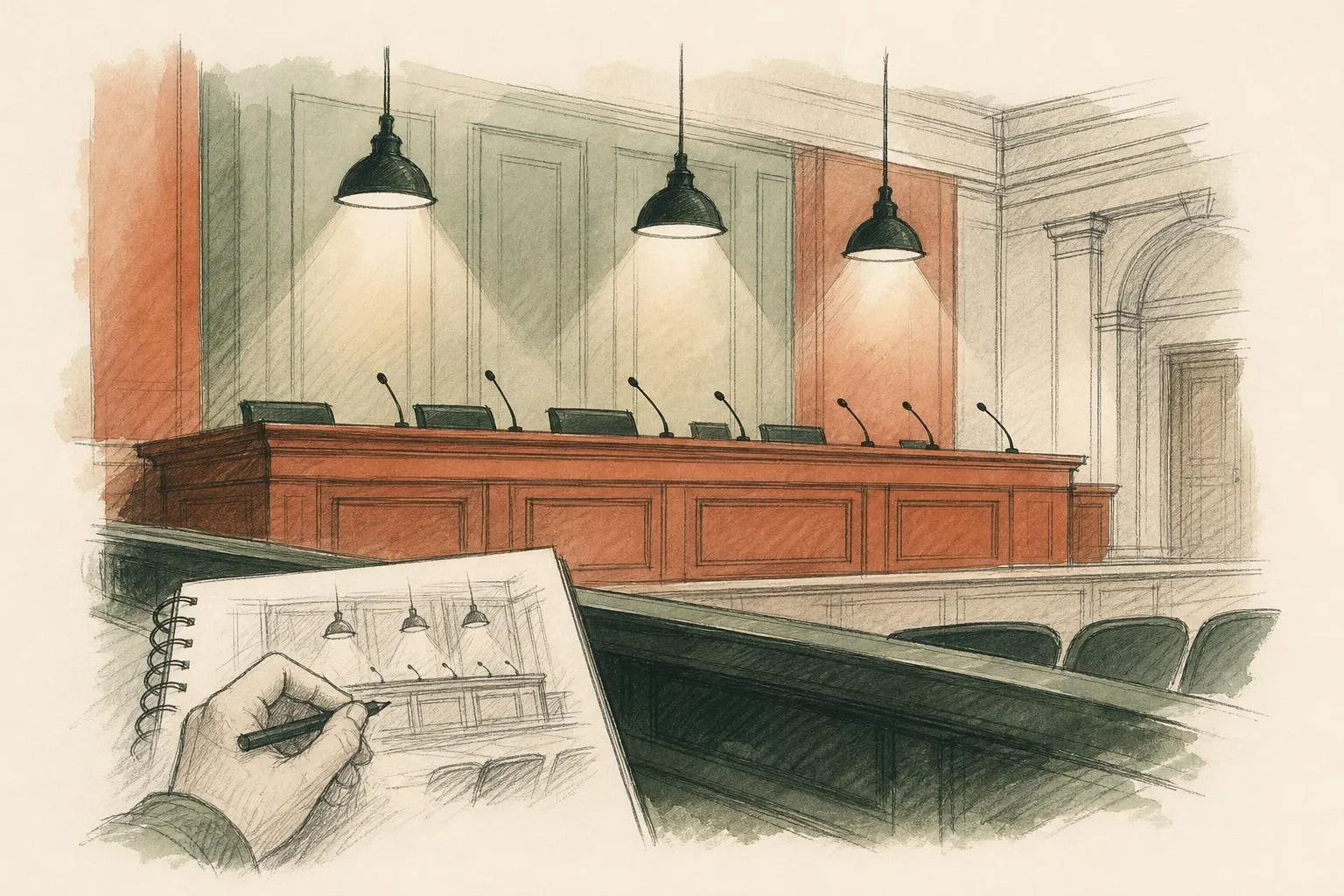
-
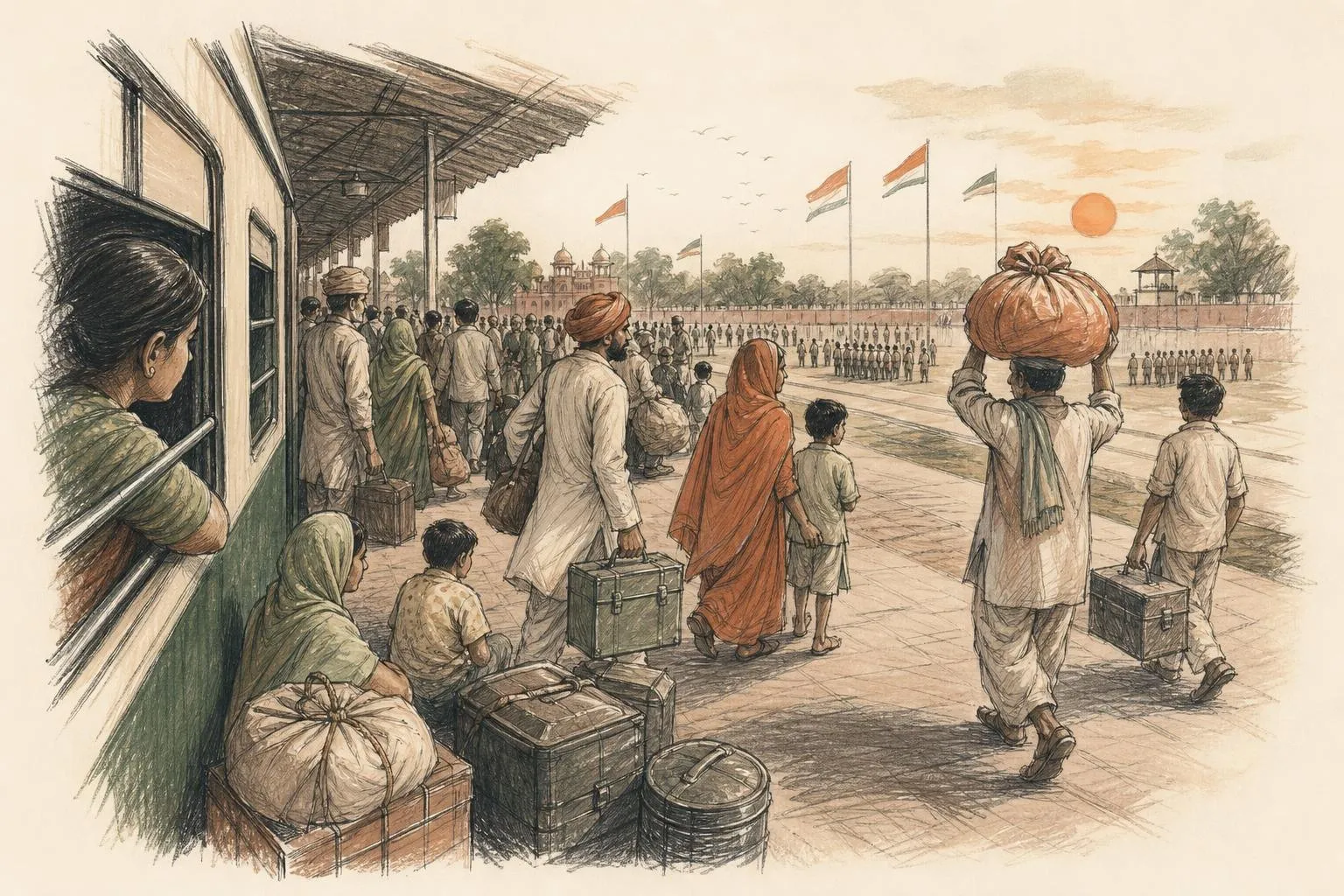
-
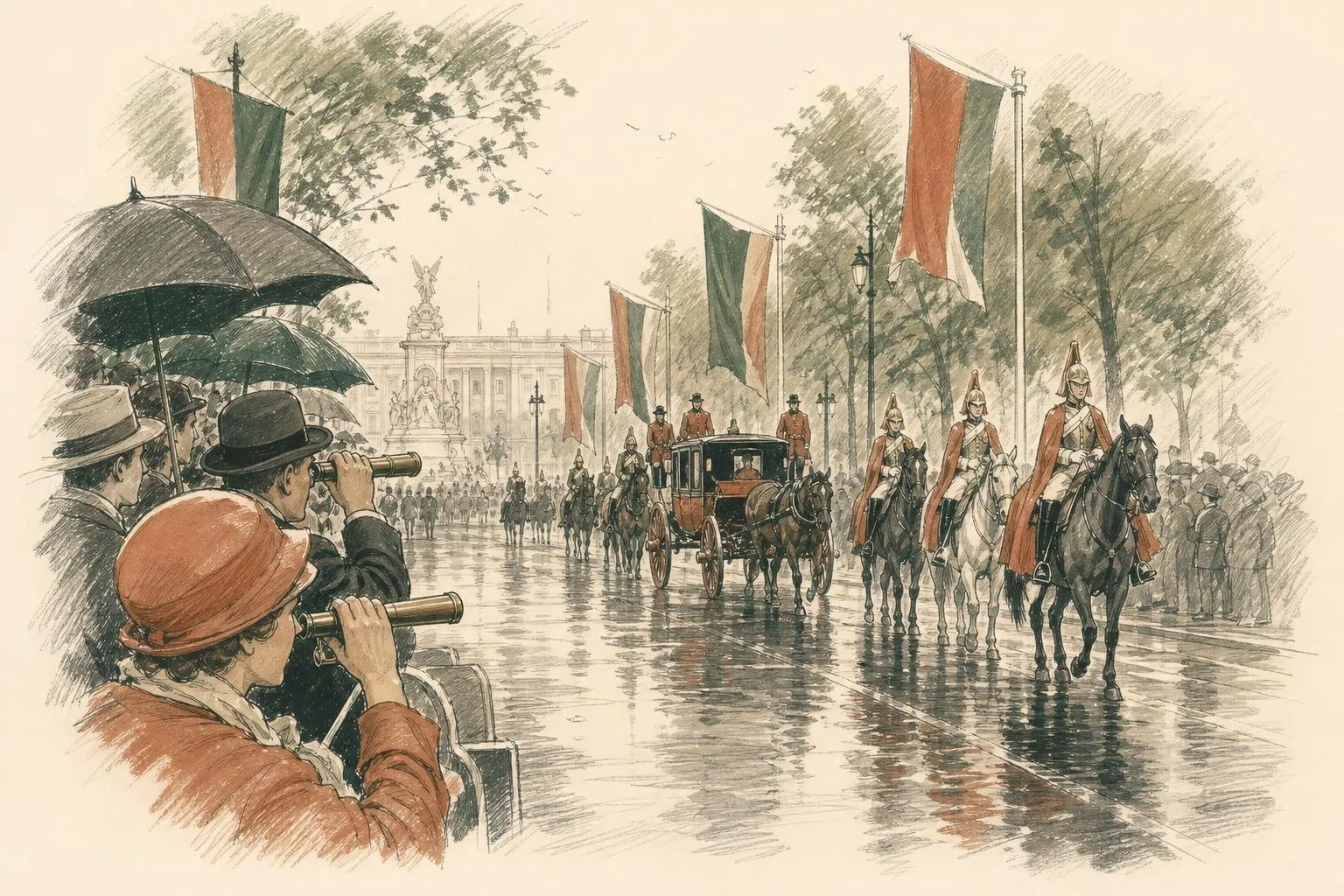
-
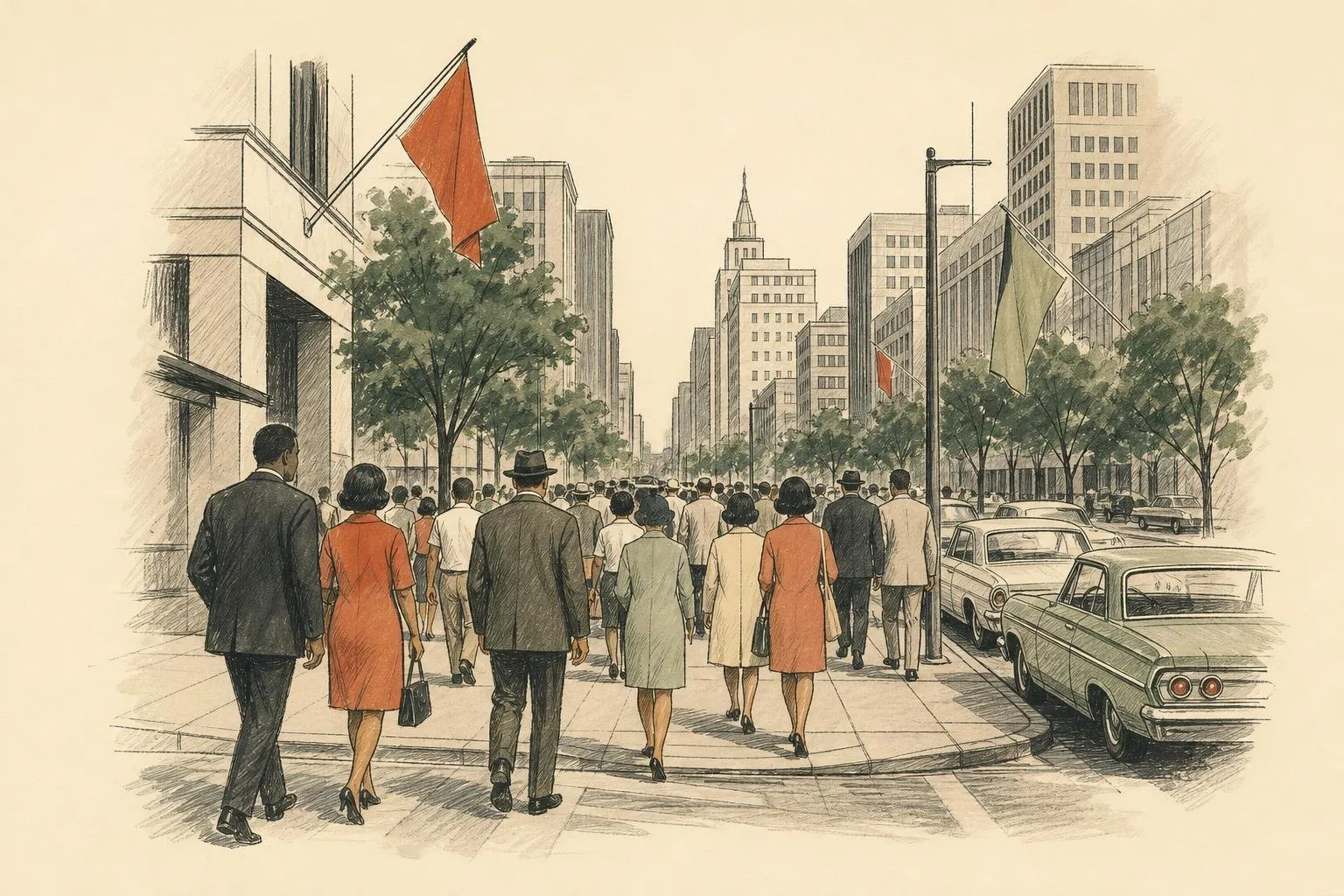
-
What Memoir of the Century shows
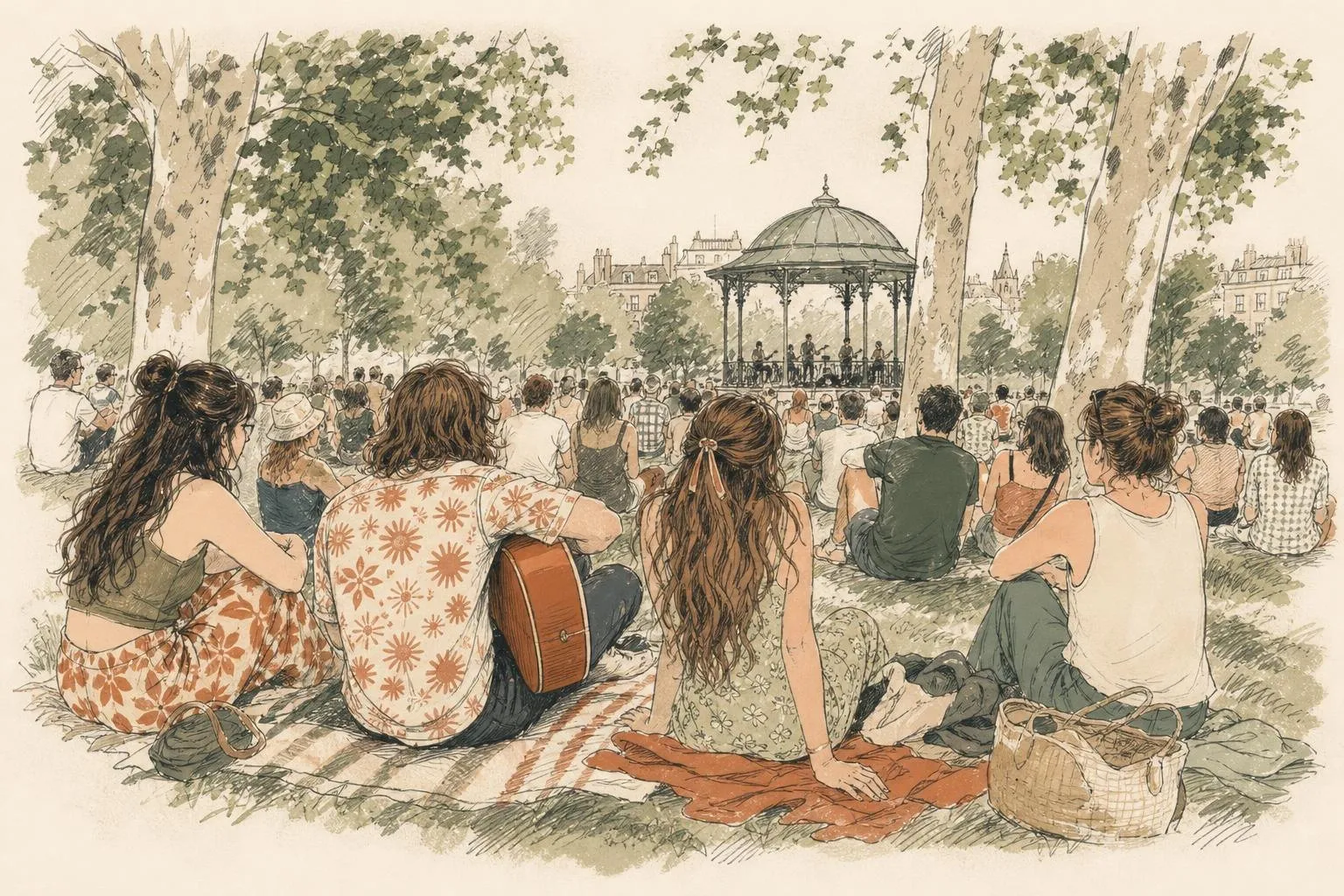
Memoir of the Century is the title Feliks Topolski gave to the huge painted panorama he began in 1975 and worked on until his death in 1989. The panorama covers the twentieth century as one person witnessed it: wars, coronations, elections, protests, parties and portrait sittings, painted on boards and set along a route through the railway arches beneath Hungerford Bridge, near Waterloo station. The subject is nominally history, but the method is a diary. Topolski painted the scenes from drawings he made on location, so the panorama is made of encounters he had personally.
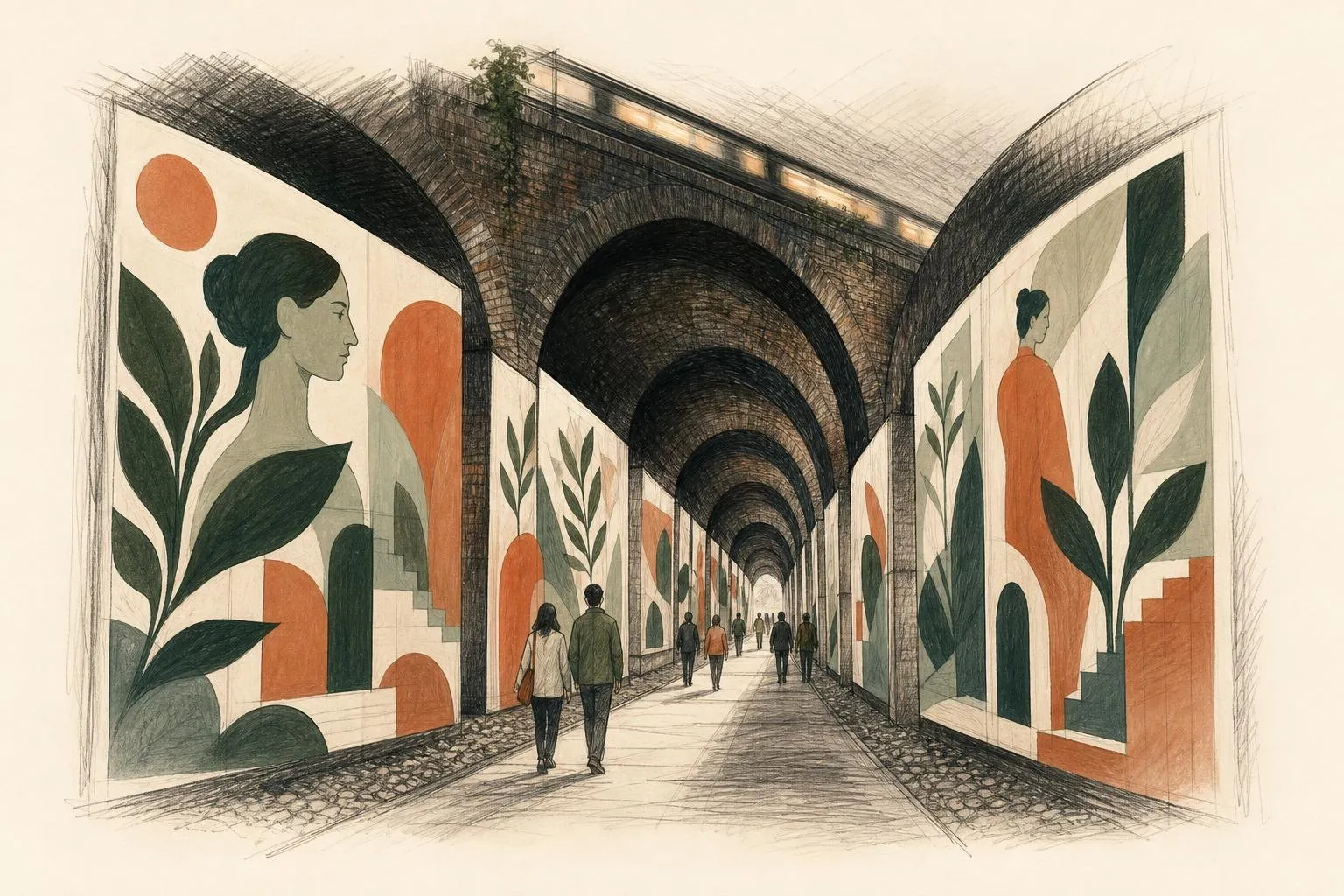
Pictures are not arranged by date. A wartime ship can sit near a post-war portrait, and a crowd from one decade bleeds into a crowd from another. The paintings blend figurative passages with areas of near abstraction, where colour and brushwork take over from description. Portraits of famous people appear many times and at many sizes among the crowds. A visitor moved through it as through a very long, crowded room.
Memoir of the Century: key facts
| Date | What happened |
|---|---|
| 3 May - 30 Sep 1951 | Festival of Britain on the South Bank, next to the arches |
| 1951 | Topolski takes the Hungerford Bridge arch as his studio after the Festival of Britain |
| 1953‑1979 | Topolski's Chronicle, twenty-four issues a year |
| 1975 | Memoir of the Century begun in the neighbouring arches |
| 1984 | The panorama opens to visitors |
| 24 Aug 1989 | Topolski dies; the work was never meant to be finished |
| Mar 2006 | Heritage Lottery Fund award for conservation announced |
| to Feb 2009 | Restorer Jim Dimond works on the panels for 18 months |
| 16 Mar 2009 | Reopens after a £3 million restoration: about 600 feet long, 243 paintings |
| 2010 | Closes to the public |
| 2013 | Arch converted to a cafe-bar; panels partly kept on site |
Scale and structure
The work is usually described as about six hundred feet long and between twelve and twenty feet high. To put that in context, six hundred feet is close to the length of two football pitches laid end to end. The panorama was painted in sections on separate wooden panels, which accounts of the 2009 restoration put at 243 paintings. When installed it twisted through the arches as a continuous path, with sudden turns, so the visitor never saw all of it at once.
The arches were a deliberate choice. Topolski had used a railway arch beneath Hungerford Bridge as a studio since 1951, and in 1975 more arches became available beside it. A railway viaduct is an unusual gallery: trains rumble overhead, the walls curve, and light is limited. Those conditions shaped how the paintings were lit and how the route was laid out.
How the panorama was made
Topolski’s method started with drawings. He sketched events and people as they happened, and many of those sketches reached the public first as sheets in Topolski’s Chronicle. Back in the studio the drawings became paintings, enlarged, combined and reworked on the boards. A figure that began as a few ink lines in a notebook could return as a large painted portrait.
Working this way meant the panorama grew in layers over years. He added sections, revised older ones and extended the route into new arches. His own account of this process appears in his autobiography, which this site does not quote. For the background on the artist, see the biography, and for the drawing method that sits behind it, see the guide to reportage drawing.
The people and places in the panorama
Topolski’s own list of subjects was wide. Statesmen such as Nehru, Mountbatten and de Gaulle appear, as do Gandhi, Martin Luther King, Nye Bevan and Enoch Powell, and from the arts Shaw, Picasso and Laurence Olivier. Hundreds of other figures, some famous and many anonymous, fill the spaces between them. The chapters on this site take the main periods one at a time, from the London Blitz to India after independence, the Coronation, the American civil rights years and the youth culture of the sixties.
Anonymous figures matter as much as the famous ones. A queue, a group of soldiers or a crowd on a pavement carries the same energy as a head of state, and that equal treatment is typical of reportage drawing. The artist records who was there, not only who was important.
Hungerford Bridge and the Festival of Britain
The arches sit on Concert Hall Approach, a few yards from the Royal Festival Hall, and they belong to the railway: Network Rail owns them, and the trains into Charing Cross run over the top. Topolski’s link with the site began with the Festival of Britain, which ran on the South Bank from 3 May to 30 September 1951. He painted a large mural for it, Cavalcade of the Commonwealth, and in the same year took the arch under Hungerford Bridge that stayed his studio until his death.
Almost nothing else from 1951 survives on that stretch of the river. The Skylon and the Dome of Discovery, then the largest domed building in the world, were cleared once the festival closed, and the Royal Festival Hall is the only festival building still standing. From the early 1970s Topolski also kept an open studio there every Friday from 3pm, so visitors could see the work in progress.
What became of the space
The arches later reopened to the public, and in time they became the Topolski Bar and Cafe, where some of his art is shown. The gallery first opened to visitors in 1984, reopened in March 2009 after a restoration costing about £3 million, part funded by a Heritage Lottery Fund grant of £999,000, and closed in 2010. In 2013 the arch was turned into a cafe-bar, with some panels kept on its walls and ceiling and the rest moved to a neighbouring arch nearer the river. The arrangement of the space has changed since the artist’s lifetime. Visitors who want to see the paintings should check the venue’s own website for access, because displays and opening times change.


The 2009 restoration
A report on the Heritage Lottery Fund award in March 2006 described damp in the arches, no environmental controls and about a fifth of the paintings in urgent need of attention. The money was meant for restoring more than half of the paintings, levelling the floors so the route was open to everyone, and adding visitor panels and audio guides. At the time the arches opened only from 5pm to 8pm.
The hands-on work fell to the restorer Jim Dimond, who spent 18 months on the boards and finished in February 2009, a few weeks before the reopening on 16 March. The reopened gallery lasted little more than a year and closed in 2010.
According to the Topolski Studio, the Memoir is now mainly kept in storage at the studio, which works as an archive and an educational space. If you want to see Feliks Topolski artwork on public walls in London, the collections table in the biography lists the museums that hold his drawings and paintings, and several of them are among the city’s free museums.
Because the original installation no longer exists in its full form, written and photographic descriptions have become the main way to understand how the whole panorama worked. That is one reason the chapter series below is organised by period and place rather than by the order of the panels.
The chapter series on this site
This site publishes a series of chapters that take the main periods of the panorama one at a time. Each chapter introduces the events behind a group of scenes, the people involved and the kind of drawing Topolski did there. They are original summaries written from published sources and are not a reproduction of anything he wrote. The chapters are:
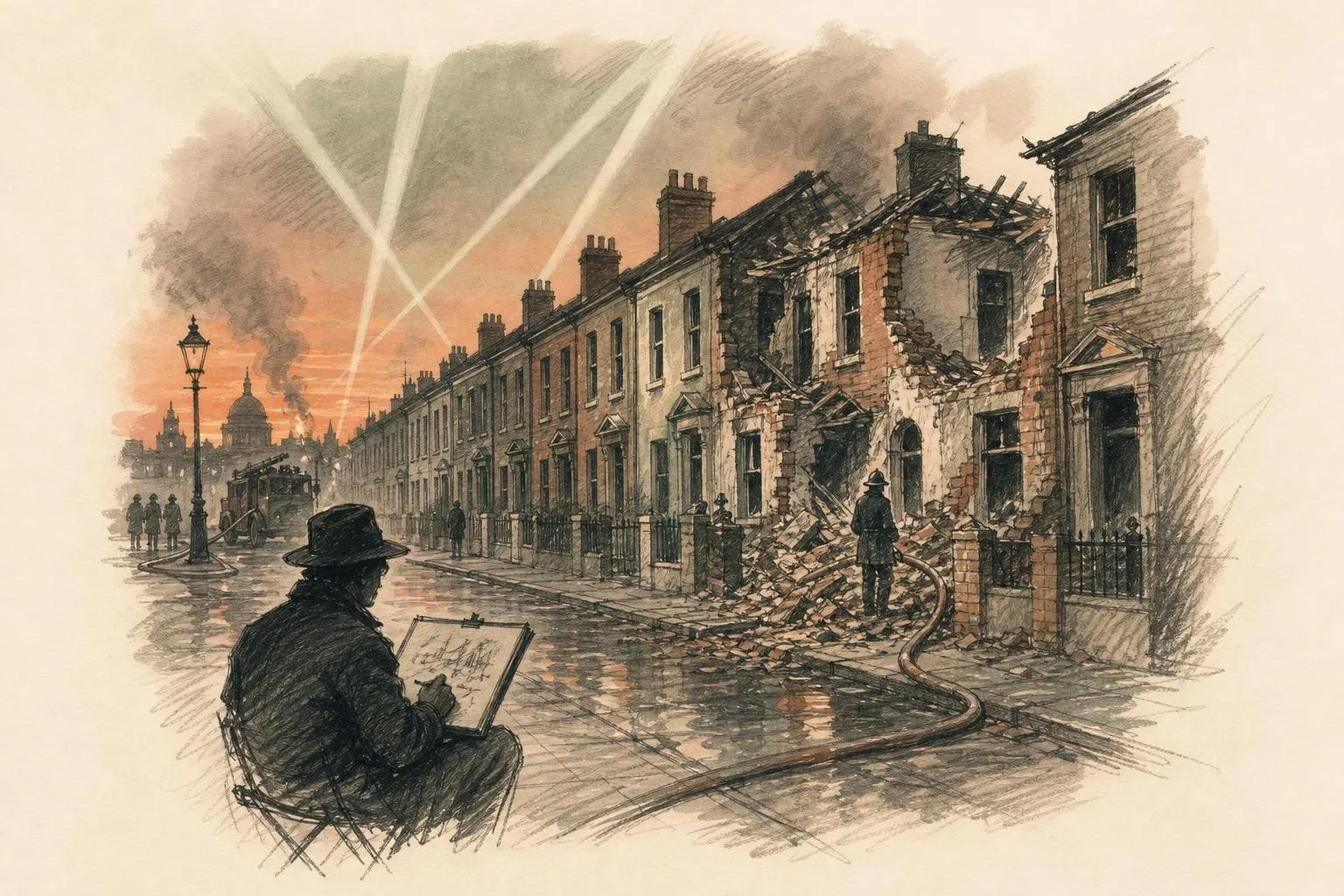
- The London Blitz, the bombing of the capital and the early war years.
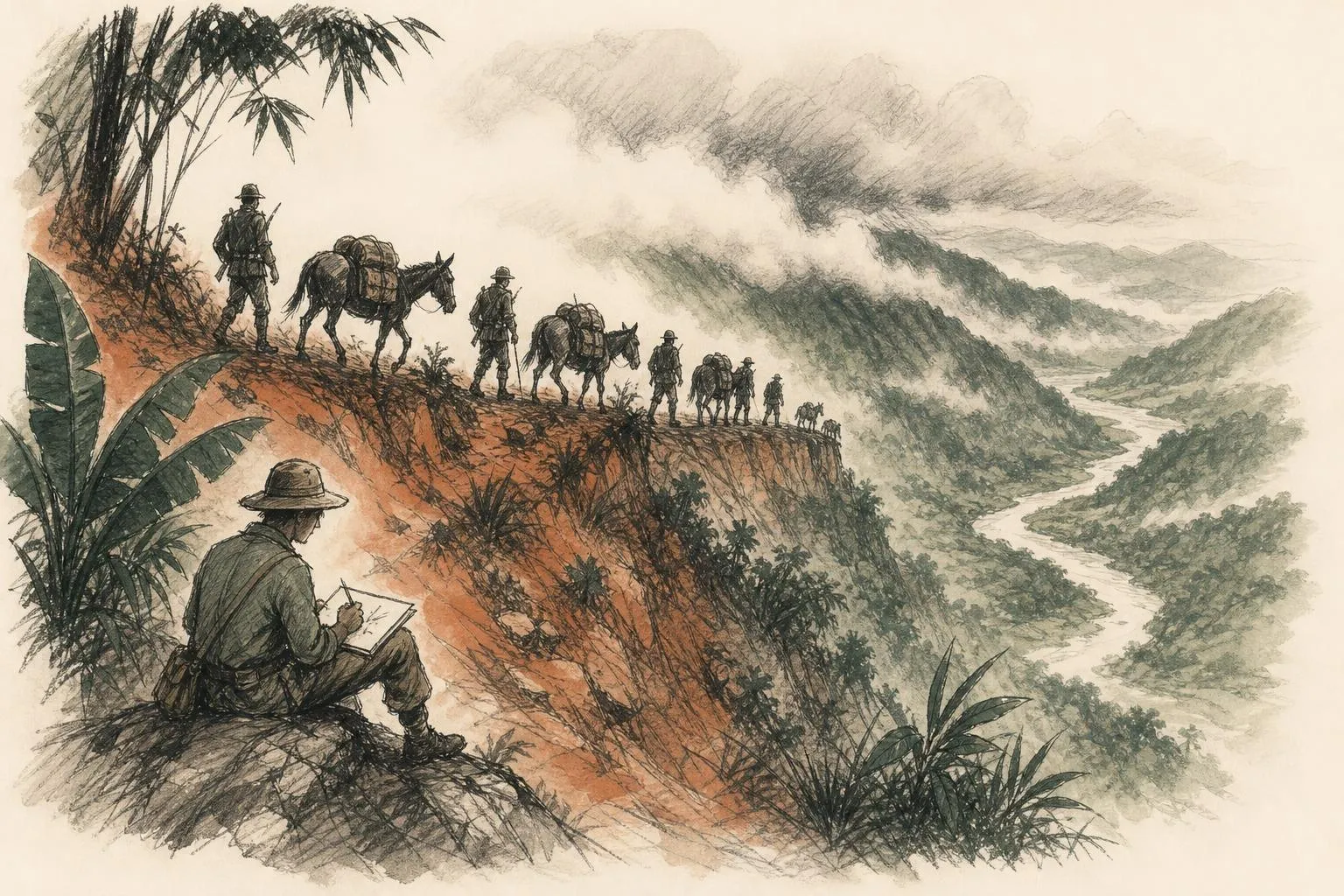
- Wartime India, Burma and the Japanese invasion of China, the eastern journeys.
- Belsen and Nuremberg, the camp after liberation and the trials.
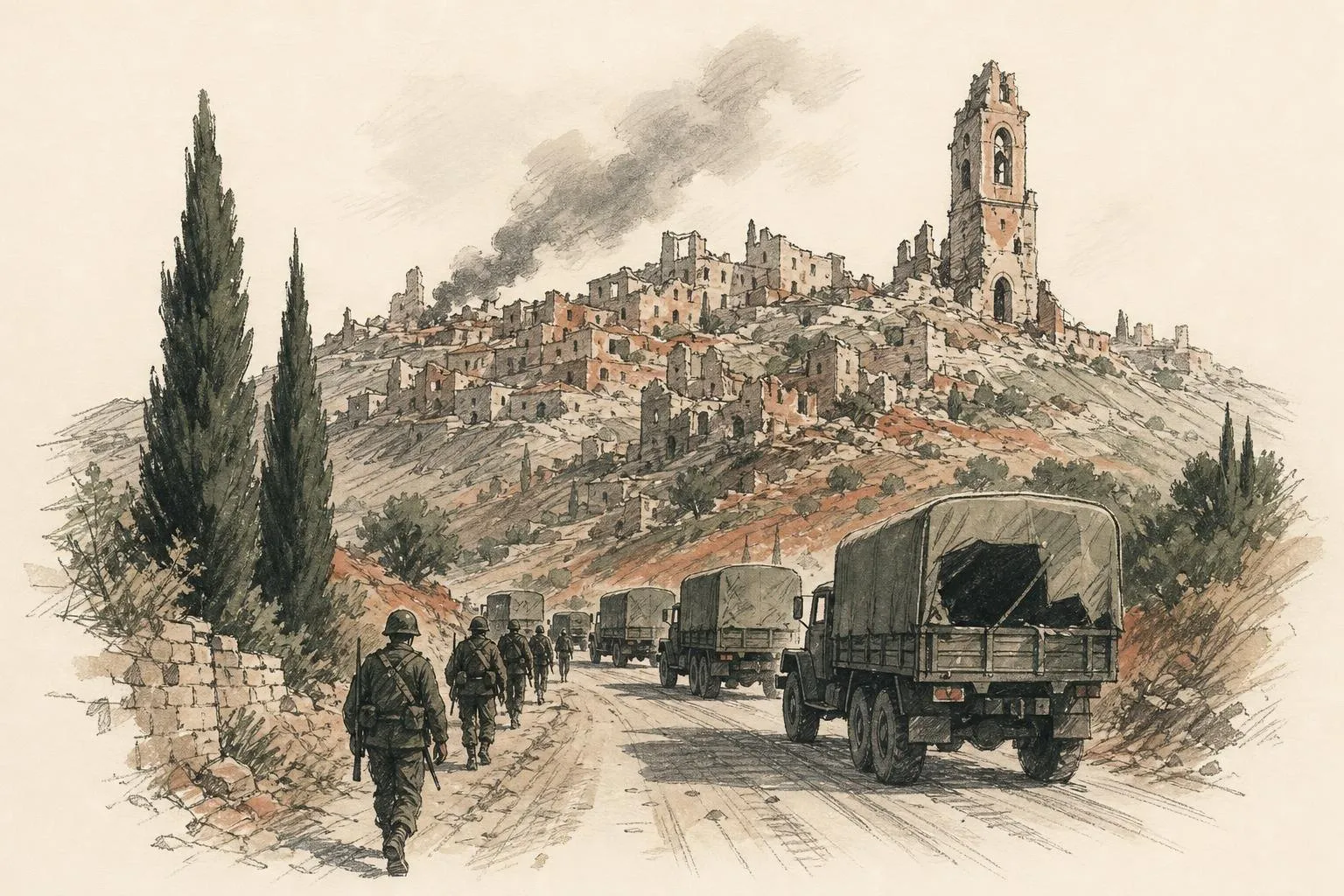
- The Last Year of the War, the closing months of the conflict.
- Post-independence India, the return to India after 1947.
- China and the Coronation, the wartime China material alongside the royal commissions.
- 1960s America, civil rights, politics and the Kennedy years.
- One Hundred Hippies, London’s counterculture.
Where to read more
The most reliable starting points are the museums and archives that hold Topolski’s drawings and paintings, and the venue in the arches where some of his art has been displayed. Reviews and photographs from the years when the arches were open also describe the route in detail. Where this site gives dates and measurements, they come from published sources and are given as approximate when sources differ.
How to use the chapters
Read in order, the chapters follow Topolski’s travels. Read selectively, each one stands alone. A reader curious about the 1960s can go directly to America and the hippies, and someone interested in the war can start at the Blitz and continue to the last year. Throughout, the aim is to explain what was happening and how an artist with a pen and a notebook recorded it.
If the panorama makes you want to draw, start small. Pick one scene near you, sit down and draw it for twenty minutes without rubbing anything out. That habit is the foundation of everything in the arches under the bridge.
FAQ
Questions, answered
01How long is Memoir of the Century?
It is usually described as about six hundred feet long, or roughly 180 metres, and between twelve and twenty feet high. It was painted in sections on boards and installed as a continuous winding route through several railway arches on London's South Bank.
02When did Topolski paint it?
He began the panorama in 1975 and kept adding to it for the rest of his life. He died in 1989, so the work grew over roughly fourteen years of painting.
03Who is shown in the panorama?
Politicians, writers, artists, soldiers, protesters and ordinary crowds from across the twentieth century. Names usually associated with it include Nehru, Gandhi, Mountbatten, Shaw, Picasso, de Gaulle, Martin Luther King, Bevan and Olivier, all drawn from people Topolski had seen or sketched.
04Can you still see the panorama?
The arches were later turned into the Topolski Bar and Cafe, where some of his work has been displayed. Sources differ on the dates of that change, and opening hours and displays move, so check the venue's own website before visiting.
05Who restored Memoir of the Century?
A Heritage Lottery Fund award announced in March 2006 paid for conservation, after a report that damp was harming the boards and about a fifth of the paintings needed urgent attention. The restorer Jim Dimond then spent 18 months on the panels, finishing in February 2009, and the arches reopened to visitors in March that year.
06Is this site the home of the Memoir?
No. This is an independent publication. It offers an introduction to the work and a series of chapters on the periods and places the panorama covers, written from published sources. It does not hold, show or sell the paintings.