Art classes
Art Classes in the UK: Drawing Guides and How to Choose a Course
Drawing is learned by doing it regularly, ideally with someone to look at your work. These guides cover the main kinds of drawing class and how to pick between them.
Course formats, single-class fees and providers outside London checked on
- Guides here
- Life drawing, anatomy, still life
- Formats
- Courses, drop-ins, workshops, online
- Single class
- From £20 at one London school
- Big Draw Festival
- Every October
- Prices and dates
- Check each provider
In this section
-
-
-
-
-
-
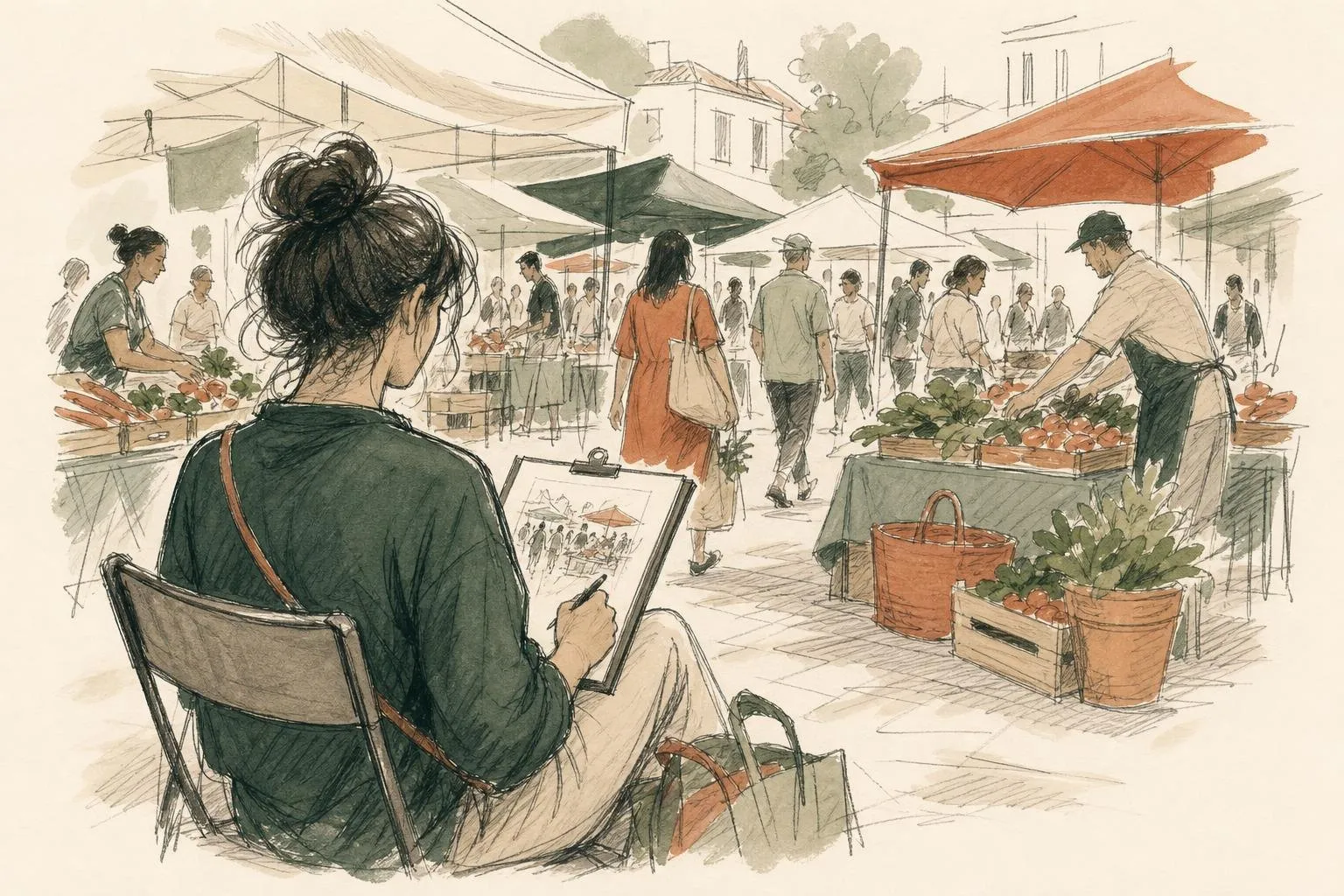
Art classes in the UK come in more shapes than most people expect. There are term-long courses at art schools, evening classes run by adult education colleges, drop-in sessions in pubs and studios, weekend workshops, museum events and informal groups that meet in village halls. The best choice depends on what you want to draw, how much you can commit and whether you want a tutor.
This hub introduces the drawing guides on this site and explains how to choose a class or course for yourself. The guides concentrate on drawing: the figure, the body beneath it and the quieter study of objects.
The drawing guides
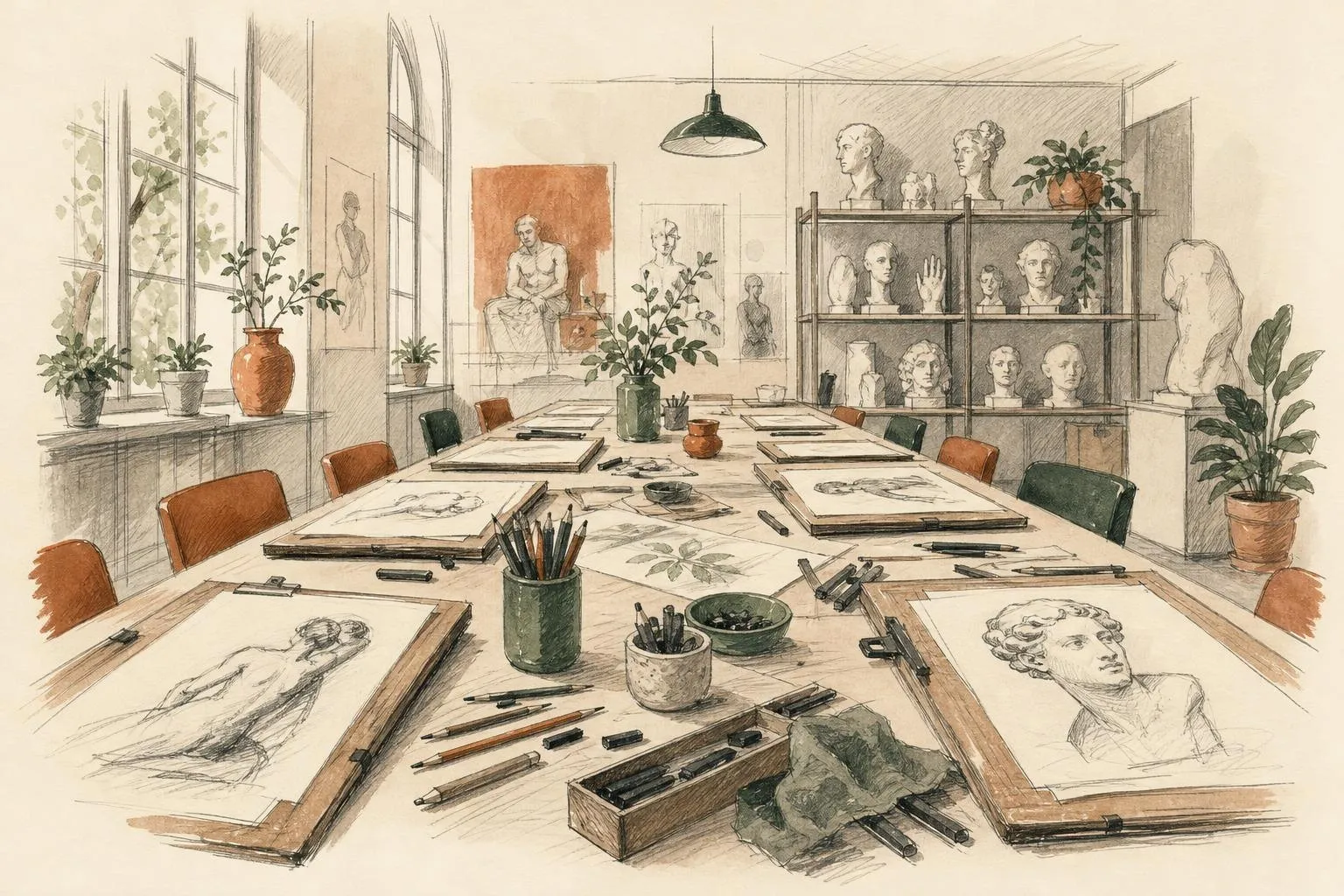
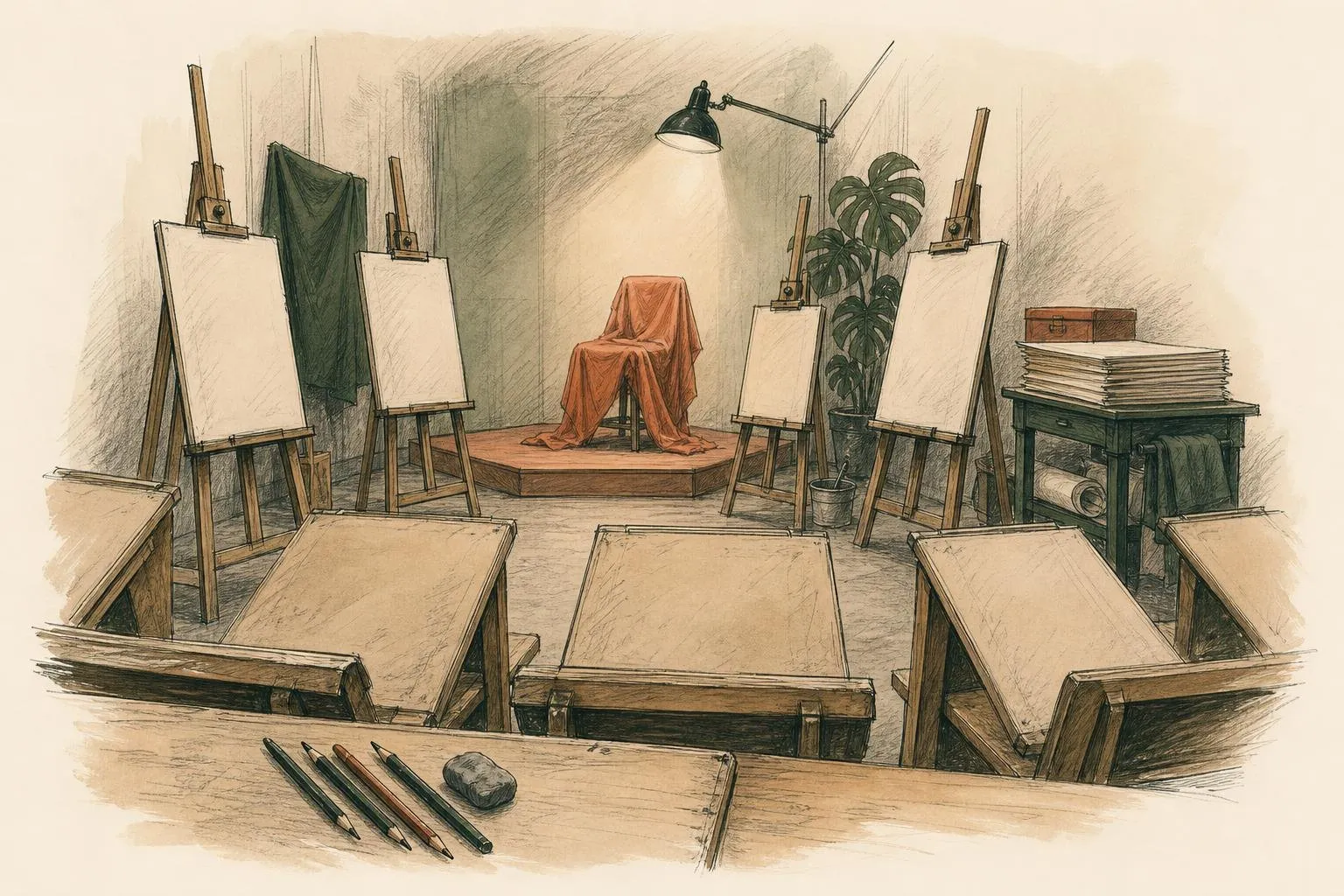
Life drawing. The central guide covers what life drawing is, how a session runs from one-minute gestures to forty-minute poses, what materials to bring, the etiquette in the room and the kinds of class that exist, from drop-ins to long-pose courses. It is the pillar of the series and the best place to start if you are curious about figure drawing.
Your first session. The walkthrough of a first life drawing class follows an evening from arrival to the last pose, with a kit list and some advice on nerves. It is meant for people who have never been in a life room.
Life drawing in London. The page on life drawing in London sorts the kinds of venue in the capital: art-school short courses, drop-in evenings, museum events and group sessions, with a short list of questions to ask before booking.
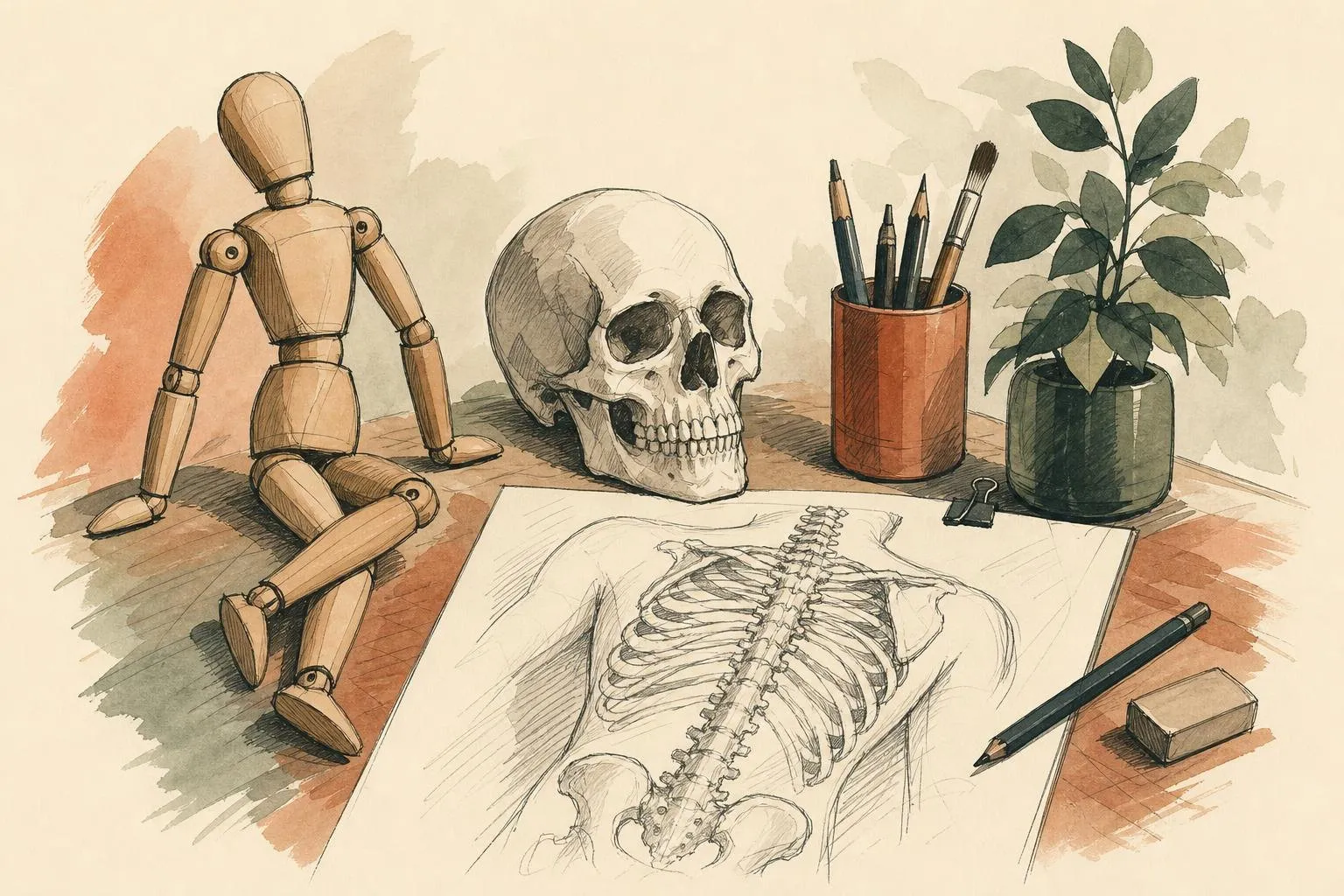
Anatomy. The guide to anatomy for artists explains proportions, the skeleton landmarks that matter, the main muscle groups and foreshortening, and suggests ways to study.
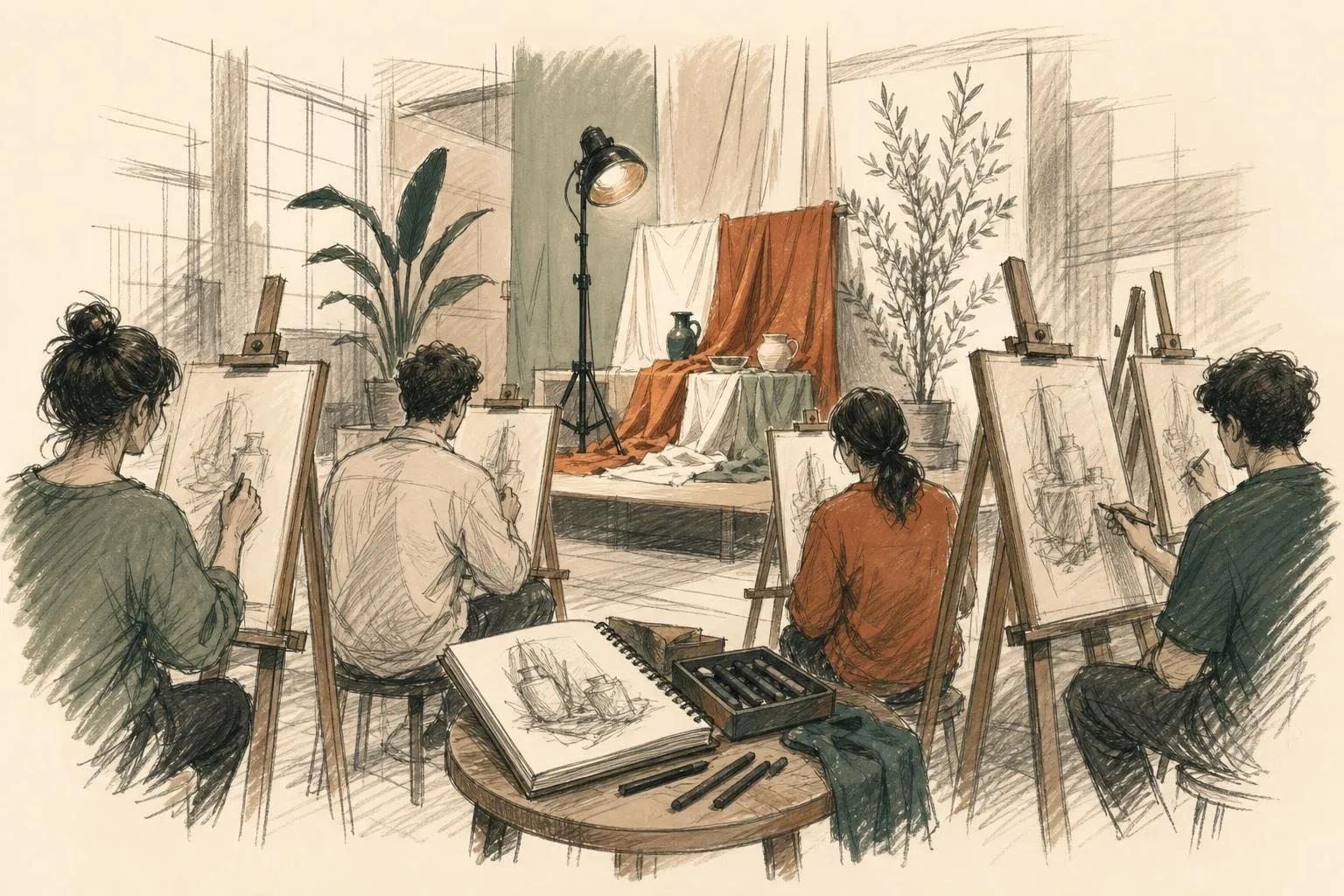
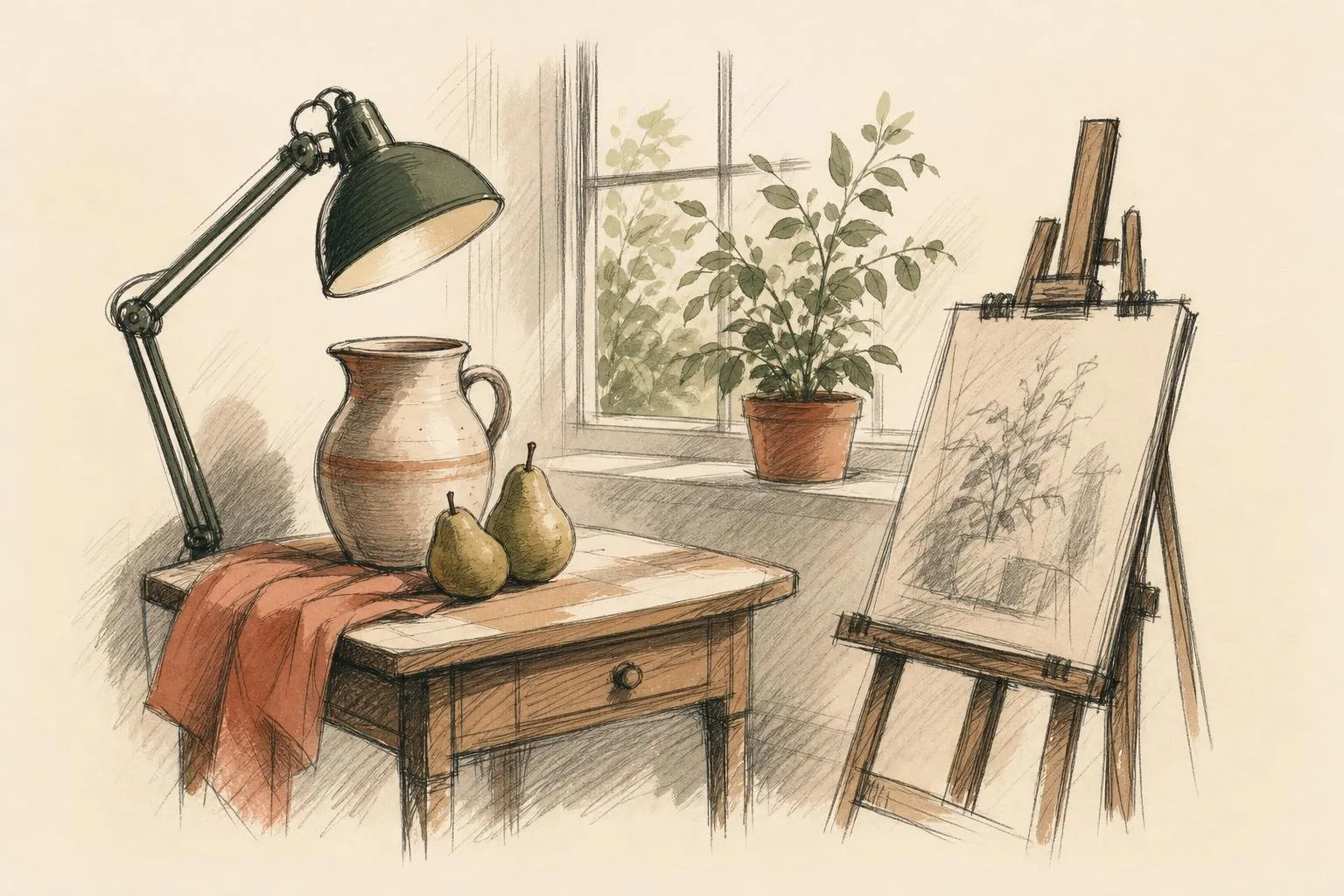
Still life. The guide to still life drawing covers the setup of objects and light, composition, tonal values and a set of simple exercises.
Beyond classes, the site has pieces on reportage drawing, the practice of drawing events and places directly as they happen, and on the habit of keeping a pocket sketchbook.
How to choose art classes in the UK
Start with what you want to learn. If you want to draw people, look for life drawing. If you want to learn how to see tone and form, a still life or beginners drawing course is better. If you want to draw outdoors, look at urban sketching groups and gallery workshops.
Then decide on the format.
A course with a tutor. Best for beginners and for anyone who wants feedback. A course gives structure, a stable group and a sequence of exercises. Many colleges and art schools run drawing courses of a few weeks to a full term.
A drop-in session. Best for flexibility and trying things out. You pay per evening and turn up. Some have a host, and some do not teach at all.
A workshop or one-day class. Good for a taster or for a specific skill, such as portrait drawing or drawing in a museum.
A self-directed study. Free and always available. Books, online videos and a regular sketchbook habit fill the gaps between classes.
Next, think about the practical side. Check the day and time, the travel, the group size and the cost. Look at whether materials are provided. Read the listing for words such as beginners, all levels or intermediate, and send a message if the level is unclear.
Whatever the format, good art classes share a few traits: a clear description of the level, a named tutor or host, a stated approach to the model or subject, and a plain answer to practical questions. If a provider cannot say what happens in a session, look elsewhere.
Course formats compared
Each format below comes with one real example, as the provider listed it. Fees and dates move every term, so treat the figures as a sense of scale and check the provider’s page before booking.
| Format | Typical length | Best for | Example as listed |
|---|---|---|---|
| Term course | 5 or 10 weekly sessions | Steady progress with one tutor | Royal Drawing School: over 80 daytime and evening courses each term, three 10-week terms a year |
| Single tutored class | 2.5 hours to a full day | Trying a subject or a school | Royal Drawing School: Drawing from Art at the National Gallery, 6 to 8.30pm, £20; Saturday life drawing, 10am to 1pm, £28, or 10am to 4pm, £50; concessions available |
| Evening short course | Several weeks in a term | Adults fitting classes around work | Cardiff Met Open Art School: ten evening and weekend courses in its 2026 spring and summer programme, including Introduction to Drawing and Life Drawing, from £80 |
| Summer school | Short and intensive | An intensive start, holiday time | Central Saint Martins: Creative Life Drawing, once a year, all levels, materials provided, from £810 |
| Live online class | 1 to 2 hours | Drawing from home at a fixed time | Royal Drawing School Digital Studio: lunchtime and evening classes broadcast from its London studios |
| Self-paced online | Any time | Irregular diaries | Royal Drawing School Drawing Foundations: on-demand course guided by eight tutors |
The range runs from £20 for an evening in a gallery to several hundred pounds for a summer week, with most adult art classes somewhere between. A drop-in in a studio or a pub usually costs less than a tutored session, and the guide to life drawing in London lists drop-in and course prices for several venues.
Where to look
The main sources of drawing classes in the UK are:
- Art schools and universities, many of which run short courses for the public.
- Adult education colleges and council learning services.
- Specialist drawing schools and independent studios.
- Museums and galleries, which hold drawing events and workshops.
- Local art societies and artists’ collectives.
London has a particularly wide range, and the page on life drawing in London goes into detail. Outside the capital, local colleges and gallery programmes are the most reliable starting points. Prices, dates and the content of courses change from term to term, so read each provider’s current listing before booking.
Drawing classes outside London
Most large cities have at least one art school or arts centre with a public programme, and these are usually the best-organised options for adult art classes outside the capital.
In Scotland, the Glasgow School of Art runs Open Studio, a programme of day, weekend and evening courses for adults. Its adult short courses run over several weeks during semester time, and are taught by practising artists and designers. Courses come at introductory, intermediate and advanced levels, so a beginner can start at the bottom rung. In summer it switches to week-long courses.
In Wales, Cardiff Metropolitan University’s Open Art School runs evening and weekend short courses in drawing, painting and printmaking. Its spring and summer 2026 programme listed ten courses, among them Introduction to Drawing and a separate Life Drawing course, both on Tuesdays, with prices starting at £80.
In the Midlands, MAC Birmingham, the arts centre in Cannon Hill Park, runs life drawing courses for adults, and its current list includes Sunday studio days for improvers. For towns without an art school, the local council’s adult learning pages and the nearest further education college are the places to check. Council-run evening art classes are often the cheapest taught option, and the listing will say whether concessions apply.
Online drawing classes
Online drawing classes come in two kinds, live and recorded. A live class has a start time, a tutor and, for life drawing, a model on camera, which recreates most of what makes a room work. The Royal Drawing School’s Digital Studio runs one- and two-hour sessions at lunchtime and in the evening, broadcast from its studios in London, so anyone in the UK can join from a kitchen table.
Recorded and self-paced courses are cheaper and fit any timetable, but they ask more of you. Set a fixed slot each week and treat it like a booked class. Drawing from a photo or a screen also flattens the figure, so mix online work with drawing from real objects, which is what a still life drawing set-up at home is for.
Free and low-cost ways in
Each October the Big Draw Festival, run by the drawing charity The Big Draw, fills the month with thousands of drawing events across the UK and abroad. The 2026 festival launched at the Quentin Blake Centre for Illustration in London under the theme Make a Mark, with artist-led workshops and drop-in activities for all ages and abilities. It is a low-pressure way to try a workshop before paying for a course.
Concessions are worth asking about. The Royal Drawing School lists concession rates on its single classes, and several London colleges offer senior or concession rates on their courses, as the London guide shows.
Learning between classes
The fastest progress comes from the gap between lessons. A short daily drawing, even ten minutes, beats a single long weekly session. Keep a small sketchbook in your bag. Draw the cup on your desk, the person across the carriage, the street from a bench. The habit of looking is the main thing a class is trying to build.
Free places to draw are plentiful too, and the guide to free museums in London lists several where sketching is part of the visit. Many sculpture galleries are quiet enough to draw in for an hour. For a busier room, the free collection displays at Tate Modern allow pencil sketching.
A sensible first step
If you are new to drawing, a sensible route is to take a short beginners course with a tutor, add one evening of still life at home each week and, once you feel ready, try a life drawing session. Each guide here ends with a practical step, and each can be read on its own.
Choose one class, book it this week, and put a pad and a stick of charcoal in your bag for the first night.
FAQ
Questions, answered
01What is the best kind of art class for a beginner?
A short course with a tutor is usually the most useful, because the exercises are planned and the feedback is regular. Look for courses described as beginners or all levels. A drop-in session is a good way to try drawing for one evening, and a self-led still life at home fills the gaps between classes.
02How much do art classes cost in the UK?
Prices vary a great deal by provider, location and length, and they change often, so the sensible approach is to look at each provider's own site. Adult education colleges, art schools, independent studios and community groups all charge differently, and some offer reduced rates or free sessions for particular groups.
03Do I need to buy expensive materials?
No. A pad of cheap paper, a few soft pencils, charcoal and a putty rubber will cover most beginner drawing classes. Many courses supply a list of what to bring, and some provide materials. Buy better paper and tools later, once you know what you use.
04Are there art classes outside London?
Yes. Most UK cities and many towns have an art college, adult education service, gallery or artists' group that runs drawing classes. Local council learning pages, university short course programmes and gallery websites are good places to look.
05How often should I go?
Weekly attendance for a month or two builds skills faster than occasional visits. A short daily sketch between classes helps even more. If weekly is not possible, a fortnightly class plus home practice works.
06Can you learn to draw with online classes?
Yes, for much of the basics. Live online drawing classes give you a tutor, a model or a set-up on screen and a fixed time each week, which is what keeps most people going. Self-paced courses suit irregular diaries but need more discipline. Online teaching struggles with one thing: nobody looks over your shoulder, so share your drawings with the tutor whenever the class allows it.