London life drawing
Life Drawing London: Classes, Drop-In Sessions and How to Choose
Life drawing in London ranges from term-long courses at art schools to pay-on-the-night evenings in studios and pubs. This guide sorts the kinds of venue and explains what to check before you go.
Venue prices and times checked on
- Formats
- Courses, drop-ins, events
- Best for beginners
- Taught short courses
- Drop-in price range
- £12 to £35 a session
- Model rate (RAM guide)
- £20 an hour
London is the easiest place in Britain to find a life model and a room to draw in. Art schools, colleges, museums, independent studios and pubs all put on sessions, from slow-paced courses in a purpose-built studio to a pay-on-the-night evening with a drink on the table. That variety is helpful, but it also makes choosing difficult. This guide sets out the main kinds of venue for life drawing in London and how to pick one that fits what you want.
Unlike most venue lists, this one gives real numbers: the price per session, how long it lasts, what is provided and who it suits, as each venue listed them for the 2026-27 season. Terms and fees change, so the venue’s booking page is the last word, but the figures show what to expect.
London life drawing prices at a glance
| Venue | Format | Length | Price as listed | Provided |
|---|---|---|---|---|
| London Drawing (Covent Garden, Waterloo, Euston) | Weekly drop-ins, plus a Saturday long-pose session | 2 hours | £12 to £17.50 | Ask when booking |
| Soho Life Drawing, Quaker Meeting House, Covent Garden | Thursday evening drop-in: a guided hour, a tea break, then a self-directed hour | 2 hours | £17 for both sessions (£18 booked online) | Pencils, charcoal, boards and clipboards to borrow; paper 15p a sheet |
| Heatherleys, Lots Road, Chelsea | Tutored drop-in, long and short poses | 2.5 hours | £35 | Easels and boards; bring your own materials |
| City Lit, Covent Garden | Beginners course after work | Evening course | £179 | Ask when booking |
| City Lit, Covent Garden | Life drawing for beginners | Course | £249 (£199 senior, £162 concession) | Ask when booking |
| Mary Ward Centre, Stratford | Tutored, mixed level, 12 weeks | 3 hours a week | £424 (£240 concession) | Buy your own willow charcoal and graphite |
| Royal Drawing School, Shoreditch | Tutored evening and day courses | 2.5 hours evening, full day | Fee on enrolment | Charcoal, easels and boards |
| Guildhall Art Gallery, City | Social class, light guidance then longer poses | 2 hours | Ticketed | All materials and a drink; 18+ |
The cheapest way in is a London Drawing drop-in; the most structured is a term at the Royal Drawing School or City Lit. Heatherleys sits between the two: a single session, but with a tutor and long poses.
Classes at art schools and colleges
Art schools and colleges run the most structured classes in the city. These tend to be short courses of one day, a weekend or a number of weeks, taught by working artists and often open to adults with no previous training.
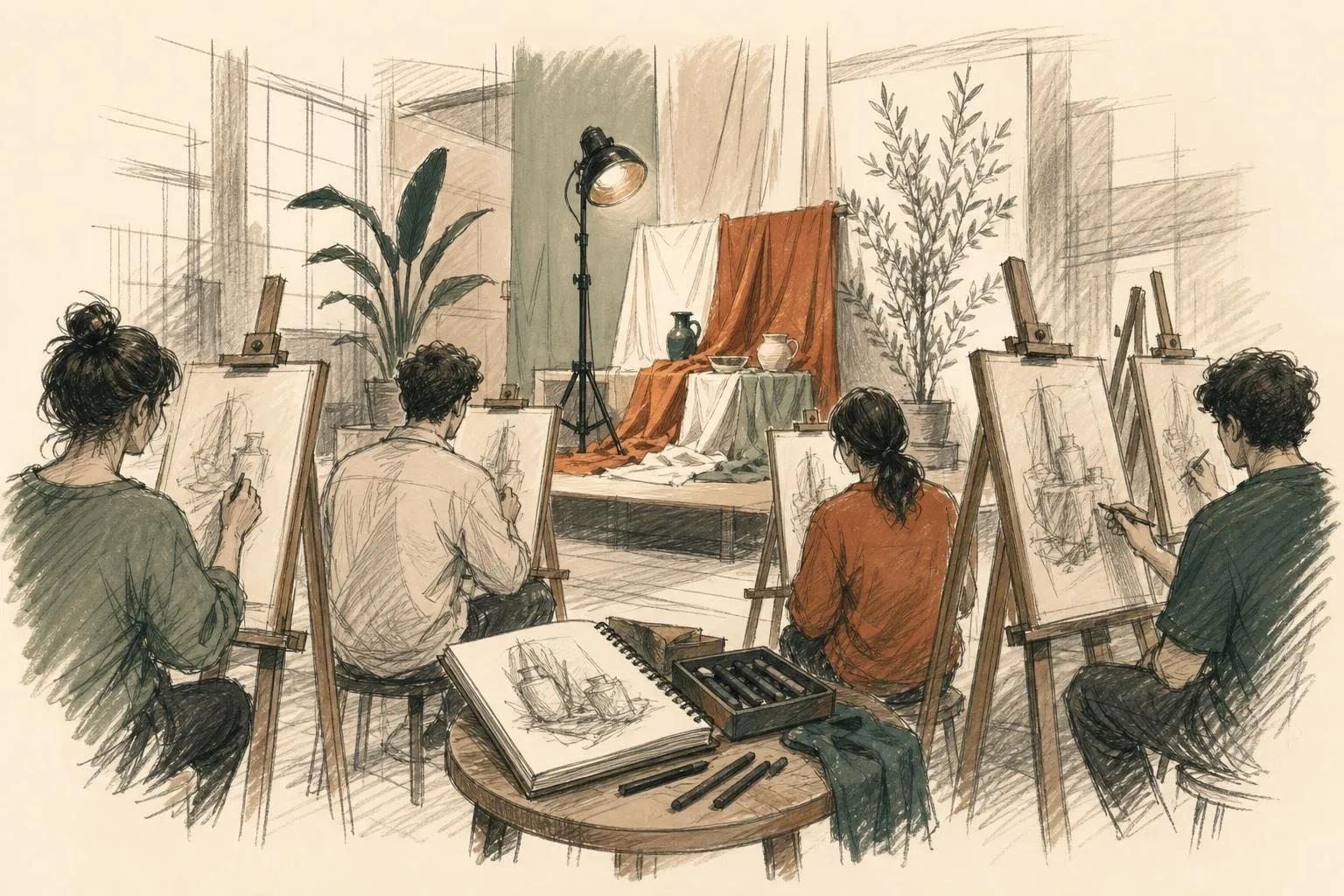
The Royal Drawing School in Shoreditch, five minutes from Old Street, runs evening sessions from 6.30 to 9pm and full-day classes, with a tutor setting a different challenge each week; charcoal, easels and boards are supplied, and newsprint and cartridge paper are on hand. It keeps a strict no-phone, no-photography rule in the studios. City Lit in Covent Garden lists its life drawing courses by level, with two aimed squarely at beginners. Further east, the Mary Ward Centre, now in Stratford, runs a 12-week Monday morning class of short and long poses for mixed levels, where you bring your own charcoal and graphite.
A short course at one of these venues is a good choice for a beginner because the structure is clear. A tutor tells you what to practise, comments on your work and moves the class from gestures to longer poses in a planned order.
Drop-in classes in studios and pubs
The second large category is the drop-in session. These are usually run by independent organisers, in rooms above pubs, in cafes after hours, in artists’ studios and in community halls. You pay per evening, sometimes with a discount for a block of sessions, and turn up with your materials. Some provide paper and boards and others expect you to bring everything.
Drop-in evenings are friendly and often have a lively mix of ages and skill levels. The structure is similar across most of them: a series of gesture poses, a break, then longer poses. Some have a host who gives a short word of guidance, and some do not teach at all. If you are new, read the listing for the words “all levels” or “beginners”, and for a mention of a tutor or host.
Three well-established examples show the range. London Drawing runs around ten sessions a week in Covent Garden, Waterloo and Euston, two hours each, plus a Saturday long-pose studio at Waterloo for people who want one pose to work on. Heatherleys, an independent art school on Lots Road in Chelsea, runs a tutored Friday drop-in, morning or afternoon, of long and short poses for all levels, with easels and boards provided. Soho Life Drawing meets every Thursday evening at the Quaker Meeting House on Hop Gardens, near Charing Cross: the first hour is guided, the second is self-directed after a tea break, and no booking is needed. It lends graded pencils, charcoal and clipboards for free and charges only for paper, which makes it one of the easiest first evenings in central London.
A good drop-in organiser will say how the model is treated, will have a house etiquette note and will answer questions before you book. Be careful with any listing that is vague about who is running the session or where, or that skips over how nude models are handled.
Untutored sessions
An untutored session gives you a model and a room but no teaching. Some people prefer these because they cost less and leave the drawing to the individual. For an experienced drawer they are a convenient way to get mileage. A beginner may get more from a taught class first, then use untutored sessions for practice.
Museum and gallery drawing events
London’s museums and galleries sometimes hold life drawing evenings, often tied to an exhibition or a late-opening night, and some run drawing workshops in the galleries. These are usually one-off or occasional events and are often popular, so booking early helps. A current example is the Guildhall Art Gallery in the City, where a two-hour class in the Victorian Gallery is run with the 2B Or Not 2B collective: light guidance in the first half, longer poses in the second, all materials provided and a complimentary drink. It is ticketed, for over-18s, and beginners are welcome. Photographing your own drawing is encouraged; photographing the model is not, unless they say yes.
Not all galleries allow drawing materials in the rooms, and wet media are often banned, so read the rules; the Tate Modern visitor guide shows what one large gallery permits. Pencil and a sketchbook are the usual allowed items. For free places to draw, the page on free museums in London lists useful starting points, and the approach of drawing a crowded place is covered in the piece on reportage drawing.
Hen party and social life drawing sessions
London also has a number of organisers who run life drawing for groups, including hen parties and birthday groups. These are social evenings with a host, often a humorous tone and sometimes drinks. They can be a gentle introduction, but the drawing is less serious than in a class. Check that the model is a professional, that the rules of conduct are stated and that the organiser tells you in advance what happens.
How to choose life drawing in London
A few questions narrow the field quickly.
- Do you want teaching? A taught class or short course is better for improvement. A drop-in or untutored session is cheaper and gives more freedom.
- How regular can you be? A weekly course rewards commitment. A drop-in suits a patchy diary.
- What time and where? Evening classes after work are the most common. Day courses and weekend workshops exist too. Travel time matters more than people expect.
- Is it nude or clothed? Most are nude, and the listing normally says so. If you prefer a clothed model, check.
- What is provided? Some venues supply boards and easels, some sell paper and some expect you to bring all your own.
- How big is the group? A small class gives more attention from the tutor, a large one is more social and more anonymous.
If you are still undecided, pick one taught course and one drop-in evening and try both. The differences become clear in one or two visits.
What the money pays for
Part of every ticket goes to the model. The Register of Artists’ Models, the UK register for life models, recommends £20 an hour and a minimum of £40 for a session, and full pay if a session is cancelled with less than ten days’ notice. It also backs a model’s right to insist on a timer for short poses, and treats rests as a matter for agreement between model and organiser. A venue that is open about how it books and pays its models is usually a venue that runs a good room.
Before you go
Read the listing, then send a short message if anything is unclear. Plan to arrive early. Take a short list of materials: paper, charcoal, a soft pencil and a putty rubber. The guide to your first life drawing class covers what to bring in more detail and what to expect on the night. For the wider background to the craft, the main guide to life drawing explains poses, etiquette and how to improve.
Keep a note of where you went and what you liked about it. After three or four visits you will know whether you want a longer course, a different venue or simply another evening drawing in a room full of people who are also working it out.
FAQ
Questions, answered
01Where can a beginner try life drawing in London?
City Lit in Covent Garden runs courses listed specifically for beginners, the Mary Ward Centre in Stratford runs a mixed-level 12-week class, and Heatherleys in Chelsea and London Drawing's weekly drop-ins welcome all levels. For a relaxed first evening, the Guildhall Art Gallery hosts a two-hour class with materials and a drink included.
02Is a drop-in session cheaper than a course?
Per evening, yes: London Drawing's two-hour drop-ins are listed at £12 to £17.50 and a tutored drop-in at Heatherleys is £35. Per hour of teaching, a course often works out cheaper. City Lit's after-work course was £179 and the Mary Ward Centre's 12-week class £424, or £240 at the concession rate. Prices are as each venue listed them for the 2026-27 season, and the venue's own booking page has the current figure. Also check what is included: some supply easels, boards and charcoal, others expect you to bring materials.
03Do I need to book life drawing in London in advance?
For taught courses and popular evenings, yes. Places are limited and a model is booked for a set number of people. Some drop-in sessions admit people on the door, but a short message beforehand saves a wasted journey. The venue's site or social page normally says how it works.
04Are there free life drawing options in London?
Occasionally. The Royal Drawing School runs a free tutored drop-in in Shoreditch, but only for full-time BA Fine Art or Foundation students, who book from 11am on the Monday before; easels, boards, charcoal and paper are provided. Eligibility rules apply, so check the details, and do not assume a free session is open to everyone.
05How much are life models paid in the UK?
The Register of Artists' Models recommends £20 an hour and a minimum of £40 for a session, with full pay if a session is cancelled at less than ten days' notice. That is a large part of why a drop-in rarely costs much less than £12.
06What should I look for in a venue?
Look for a clear description of the session, whether there is a tutor, whether materials are provided, the pose structure and the way the model is treated. A good organiser states the etiquette rules. Reviews from past attendees are useful, as is an email reply that arrives promptly and answers what you asked.