About the publication
About Drawn from Life: What This Publication Covers and How It Works
Drawn from Life is an editorial publication about drawing from life, reportage drawing and the free art of London. This page explains what it covers, how pieces are checked and how corrections are handled.
Page counts and editorial checking process checked on
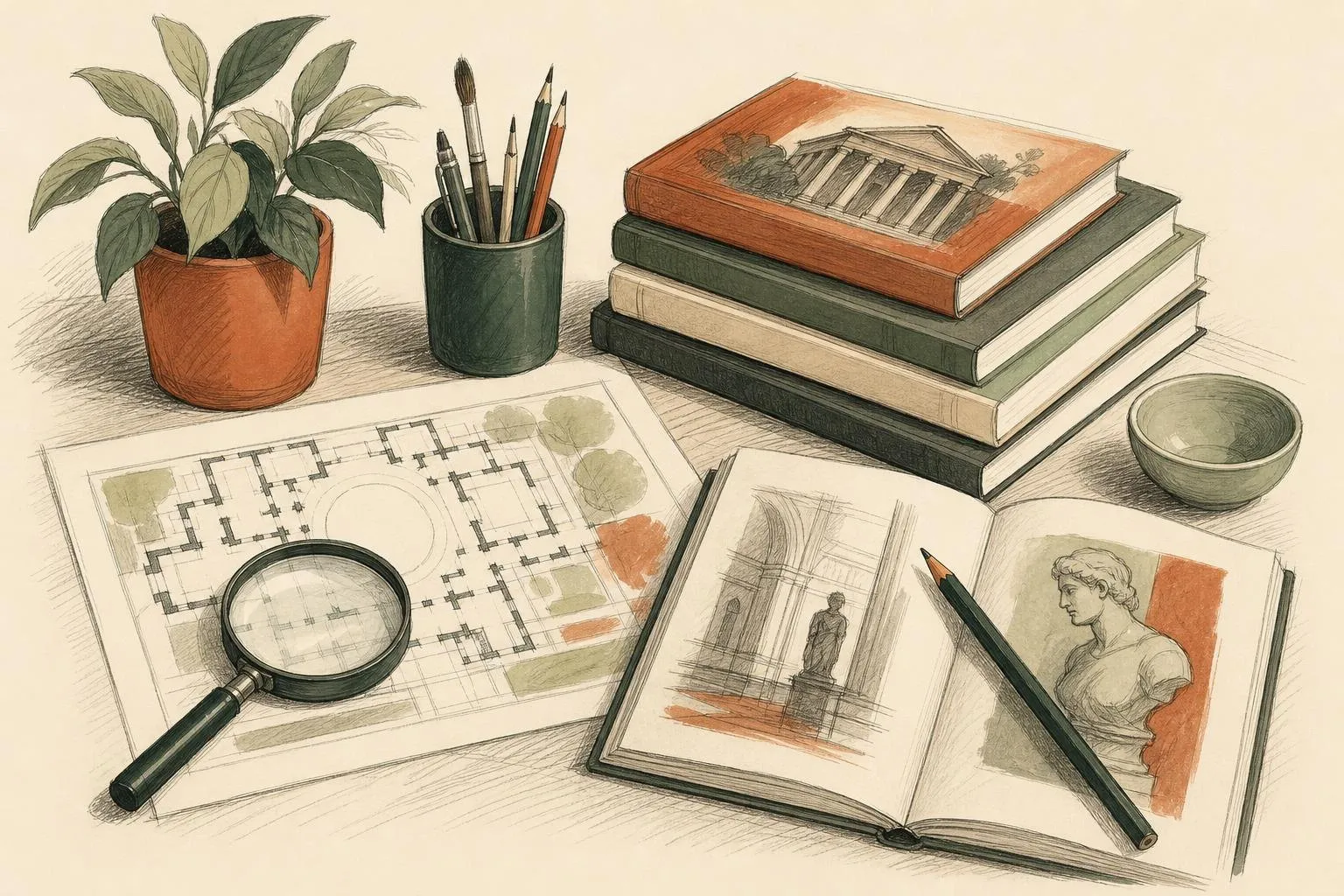
Drawn from Life is a small editorial publication about one habit: looking hard at something in front of you and putting it on paper. Its subjects are the practice of drawing from life, the tradition of reportage drawing, and the free art that London makes available to anyone who walks in. Below is what it covers and how its pages are checked.
This website is an independent editorial publication and is not operated by Topolski Studio.
What the publication covers
The site has 26 pages, and they fall into four groups.
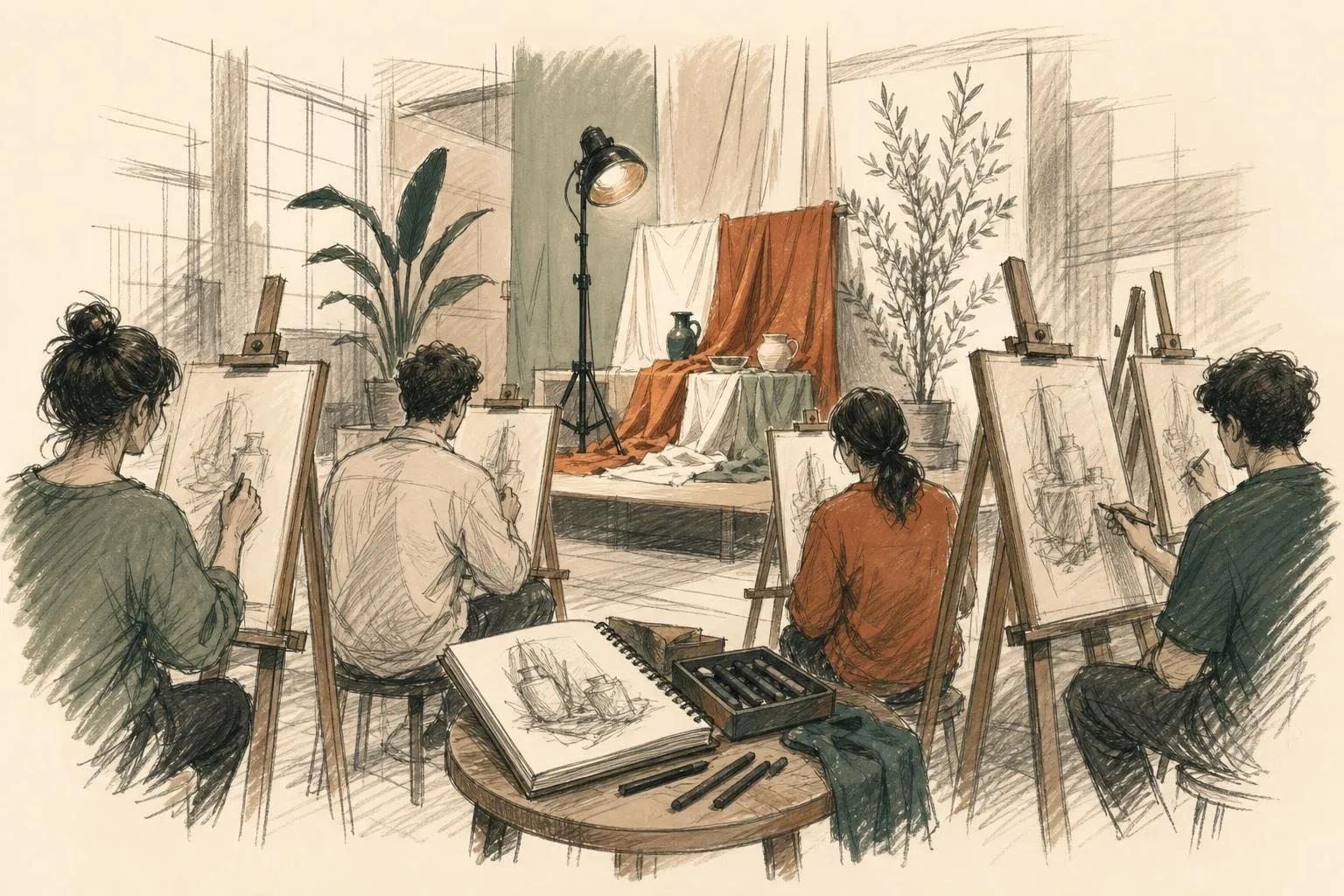
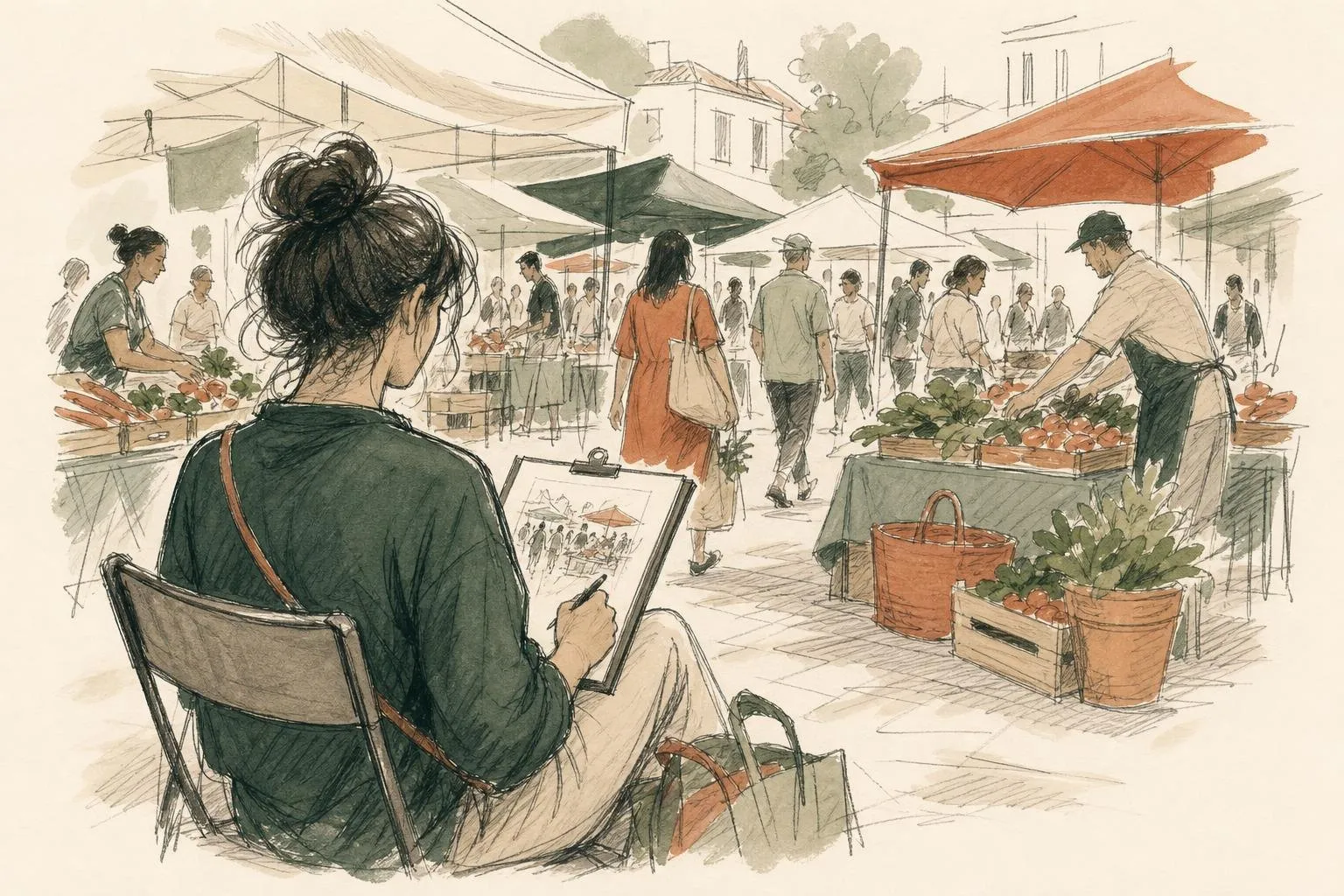
The largest practical group is about drawing from observation. A hub on art classes leads to guides on life drawing for beginners, a first session with a model, life drawing classes in London, anatomy for artists and still life. Alongside them sit a guide to reportage drawing and a piece on drawing London’s crowds, buses and river when nothing holds still. These pages name real courses, venues and books, and many of them put the details side by side in a small table.
The second group treats the twentieth-century reportage artist Feliks Topolski as a subject of art history. There is a biography, a page on Topolski’s Chronicle, the broadsheet he published from 1953, and a page on Memoir of the Century, the painted panorama under the arches of Hungerford Bridge. Eight chapter pages follow his career in order, from the London Blitz and the war in India, Burma and China to Belsen and Nuremberg, post-independence India, the 1953 Coronation, 1960s America and London’s counterculture. They are written from published sources, as biography and history.
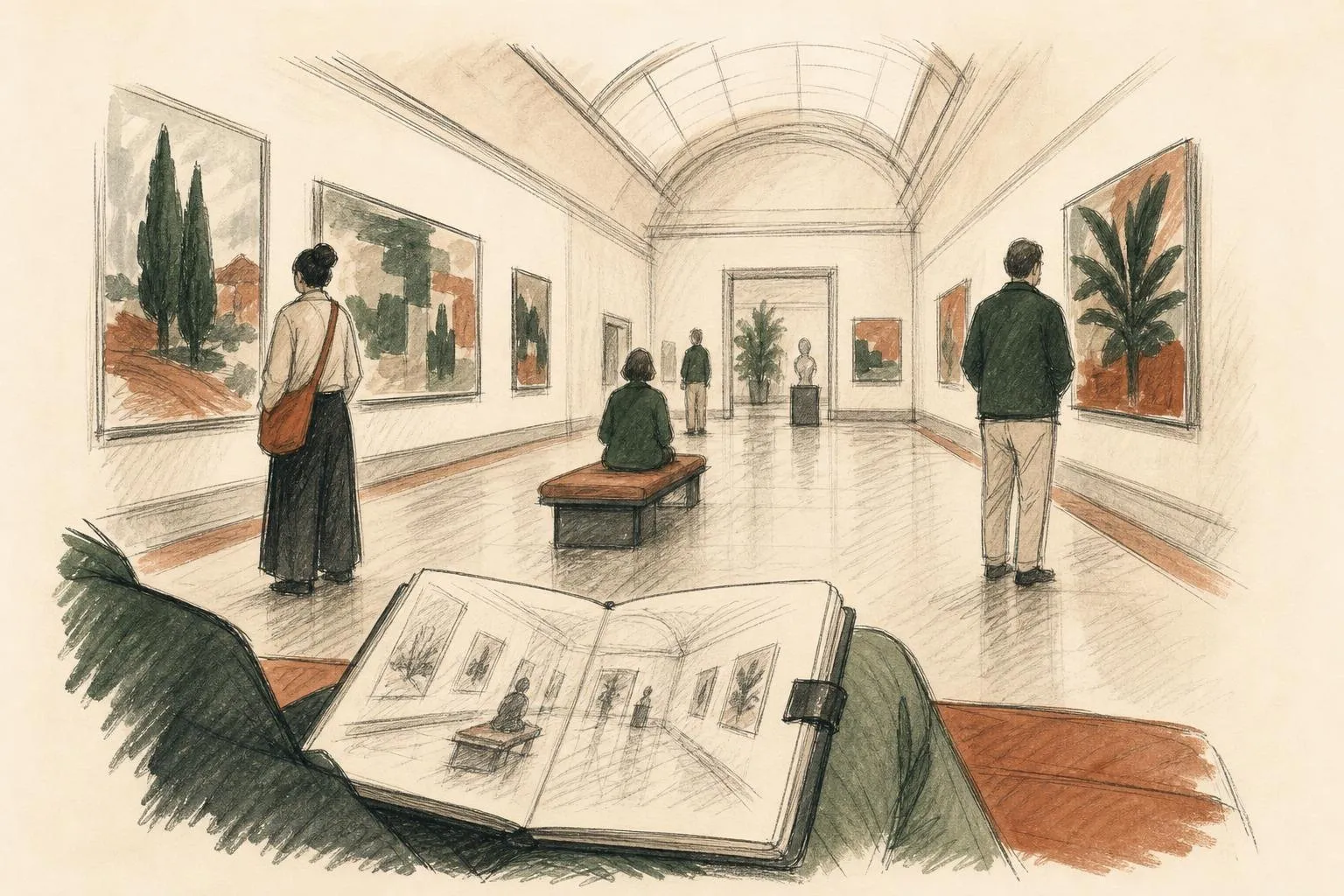
The third group is London’s free art. The guide to free museums in London covers which permanent collections cost nothing, what is ticketed and how sketching works in the galleries, and a separate Tate Modern visitor guide covers the gallery on Bankside. The Journal gathers articles on sketchbook habits, drawing in the city and the ways art turns up in popular culture.
Finally there is the Drawing Lab, a browser tool that turns a sketch into a raised relief and exports a file for a 3D printer. It runs on the reader’s own device.
Where the facts come from
Every fact on the site should trace back to a source that can be named. For museums, galleries and art schools, that source is the venue’s own website: its visitor page, its course listing or the fact sheet it publishes for each term. For products, it is the maker’s page, so a paper weight comes from the manufacturer and not from a shop listing. For history, the sources are biographies, exhibition catalogues, institutional collection records and reliable reference works.
When a figure appears in only one place and the venue or maker does not publish it, it is left out. A price that a school no longer shows, a course date that has not been announced, a page count that differs between three stockists: none of these goes in. Where a detail is likely to change, the page says so and points to the venue.
Quotations are used only when they can be traced to a published text. The writings of any artist, Topolski included, are summarised in the publication’s own words and never copied.
The checked-on date
Pages that state facts liable to change, such as opening hours, admission rules, class fees, course dates, model rates or paper weights, carry a line near the top naming what was checked and the date of the check. The line reads, for example, “Opening hours, prices and gallery rules checked on” followed by the date. It covers the facts it names. A biography chapter has no such line, because the date of a 1940 drawing does not move.
Venue facts are rechecked against the venue’s own pages when a new term, season or programme is published, and before any page that describes them is revised. Schools in London usually publish a programme per term, and museums change hours for holidays and late openings, so those pages are the ones looked at most often. When a course has ended and no new dates are listed, the page says that it runs periodically and sends the reader to the school’s programme, so an old date never reads like a current offer.
Corrections
A correction is made in the sentence where the error sat, and the checked-on line is updated with the date of the recheck. The earlier wording is replaced. A museum that has changed its admission rules counts as an error to fix as soon as the change is confirmed on the museum’s own page. A difference of taste, such as which gallery suits sketching better, does not.
If a correction removes a fact without a replacement, because the source has gone or no longer publishes it, the sentence is rewritten around the gap instead of keeping a number that can no longer be checked.
What it does not do
The publication does not run classes, sell tickets, take bookings or hire models. It does not speak for any museum, school, gallery or artist’s estate. It does not claim to have attended the classes it lists or tested the venues it describes; it reports what those places publish and what is generally known about the practice.
It does not publish prices, dates or opening hours that cannot be confirmed on the day of the check. Quotations, statistics and people are never invented. A page about art-themed entertainment treats that subject as an observation of how art is borrowed outside the gallery and does not recommend it.
Where to start
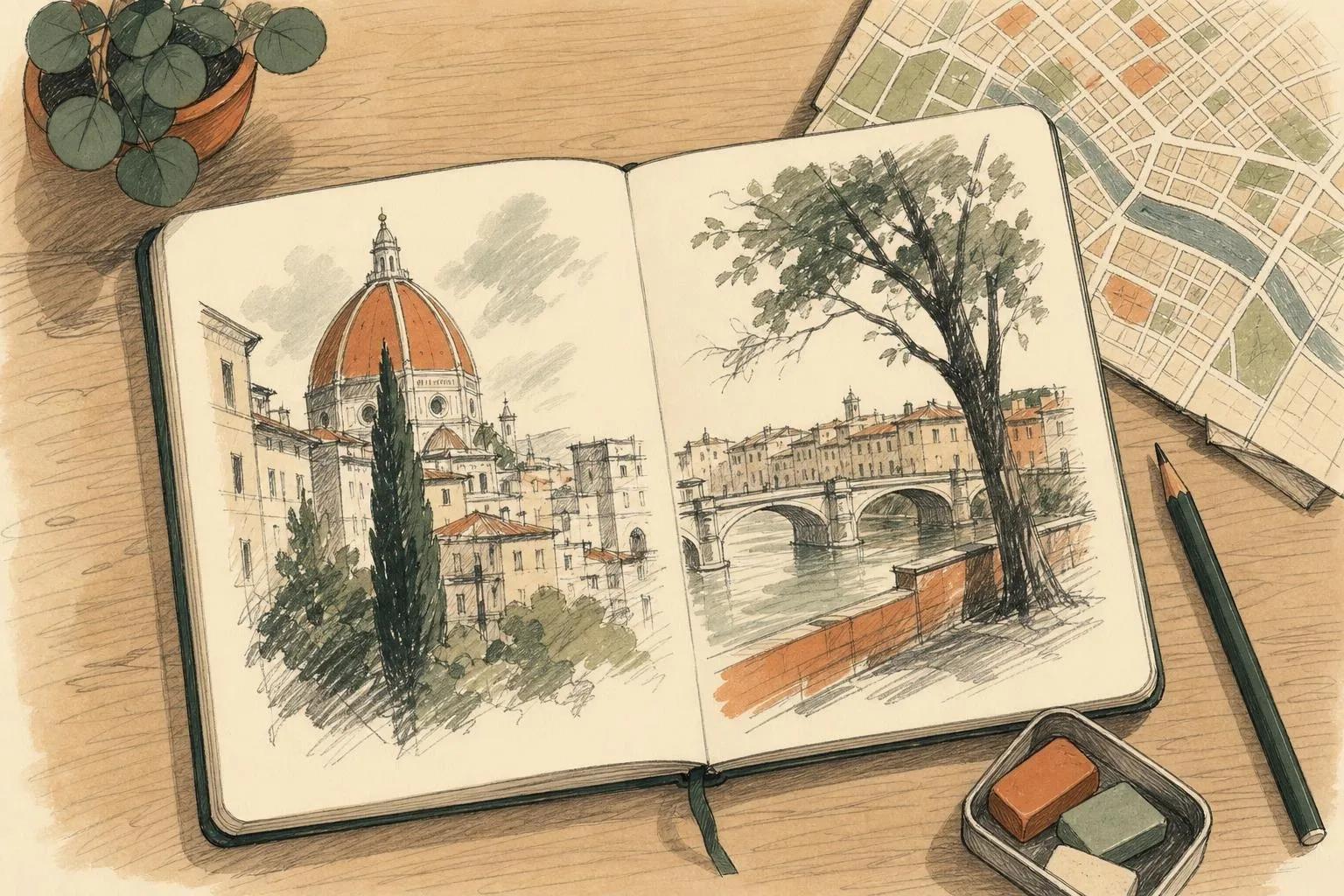
To start drawing today, the guide to the pocket sketchbook lists paper weights and page sizes taken from the makers. To find somewhere to sit and draw this weekend, use the free museums guide. For reportage and the artist most associated with it on this site, begin with the page on the artist, then the chapter on the Blitz.
FAQ
Questions, answered
01What does Drawn from Life cover?
It covers drawing from observation, including life drawing, anatomy, still life and reportage drawing, the twentieth-century artist Feliks Topolski as a subject of art history, and the free art collections of London. It also has a browser tool, the Drawing Lab, that turns a sketch into a file for a 3D printer.
02Where do the facts on the site come from?
From the source closest to the fact. Opening hours, admission rules, course dates and fees come from the venue's or school's own pages, product details from the maker's own pages, and history from biographies, catalogues and collection records. A figure that only a shop listing or a single unconfirmed page gives is left out.
03What does the checked-on date at the top of a page mean?
Pages that state facts liable to change carry a line naming what was checked, such as opening hours or class fees, and the date of that check. It covers those facts only. Prices and times can change after that date, so the venue's own page is always the place to confirm them before you travel or book.
04How are errors corrected?
The wrong sentence is corrected in place and the checked-on line is updated with the date of the recheck. When a fact can no longer be confirmed, because a school has dropped a course or a maker no longer publishes a figure, the sentence is rewritten without it instead of keeping an old number.
05Does Drawn from Life run classes or sell tickets?
No. It does not run classes, take bookings, sell tickets or hire models, and it does not speak for any museum, school or artist's estate. Courses and venues are described from what they publish, and booking is always done directly with them.