The Chronicles
Topolski's Chronicle: The Broadsheet of Drawings Begun in 1953
Topolski's Chronicle was a newspaper made almost entirely of drawings. Feliks Topolski produced it from his own studio from 1953, usually one subject per issue. This page covers its format, printing, run and surviving copies.
Run dates, frequency, issue formats and holdings checked on
Keep reading
-
-
-
What Topolski’s Chronicle was
Topolski’s Chronicle was a self-published broadsheet in which each issue treated a single subject through drawings. Feliks Topolski began it in 1953, the year of the Coronation of Elizabeth II, and kept it going for around three decades. Where an ordinary newspaper used columns of text, the Chronicle used pages of drawings made on the spot. It was published from his studio, and it reached readers by subscription, which is why institutional libraries such as the Marriott Library at the University of Utah ended up with long runs.
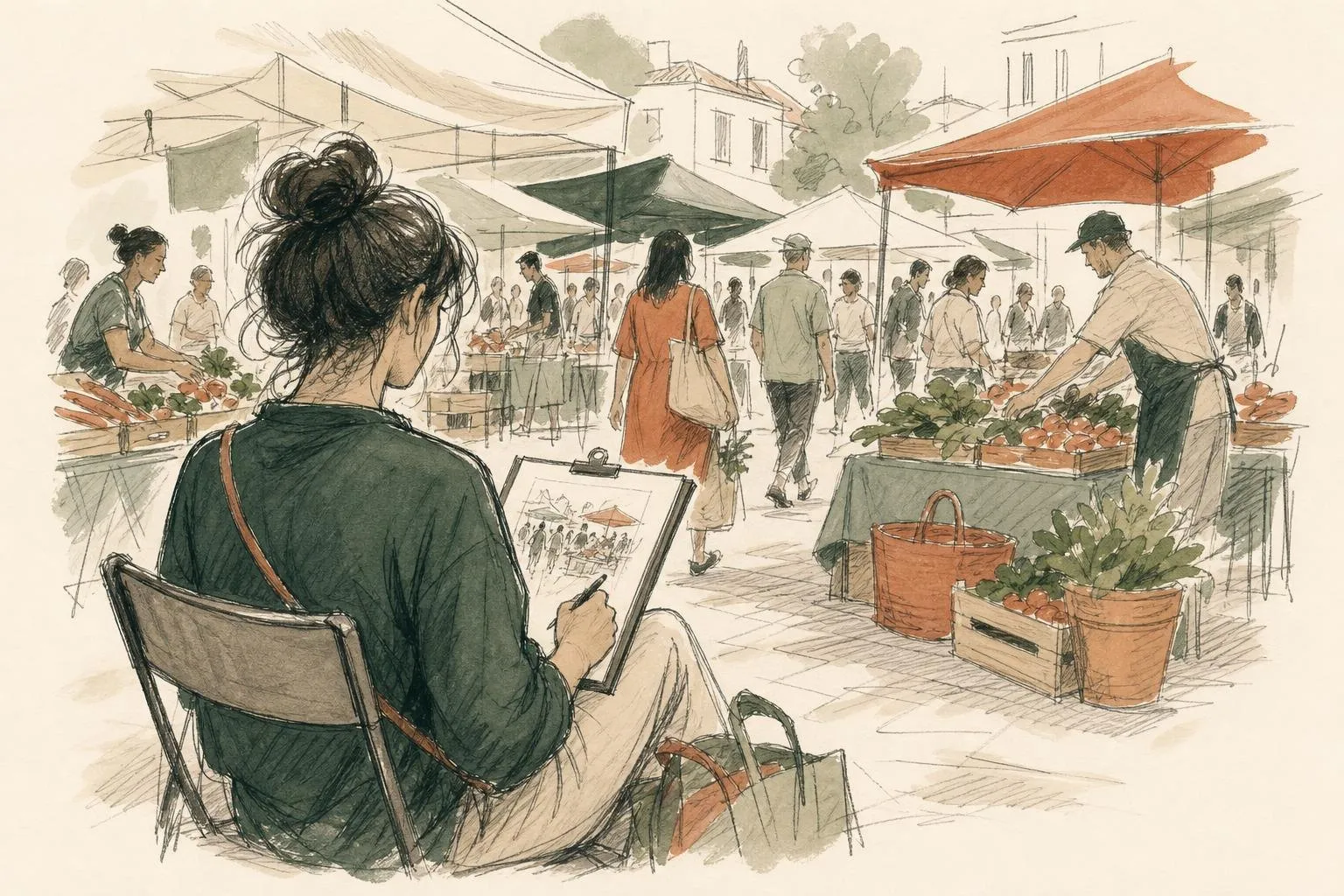
The form has an old lineage. A broadsheet is a single large sheet that can carry pictures to a wide public, and Topolski’s version put the artist in the role of reporter: one person, one line, one eyewitness record of whatever he had gone to see.
Format and printing
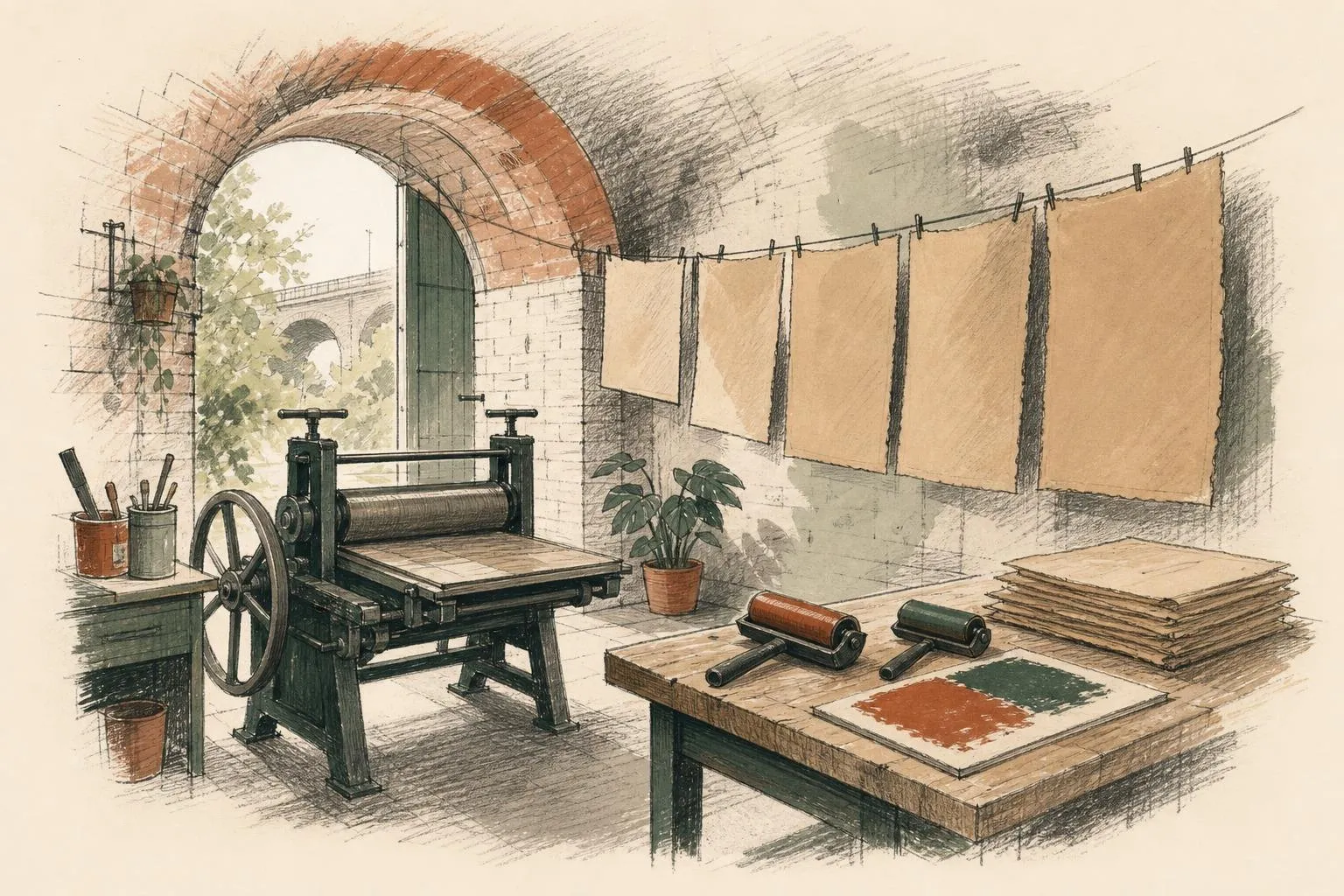
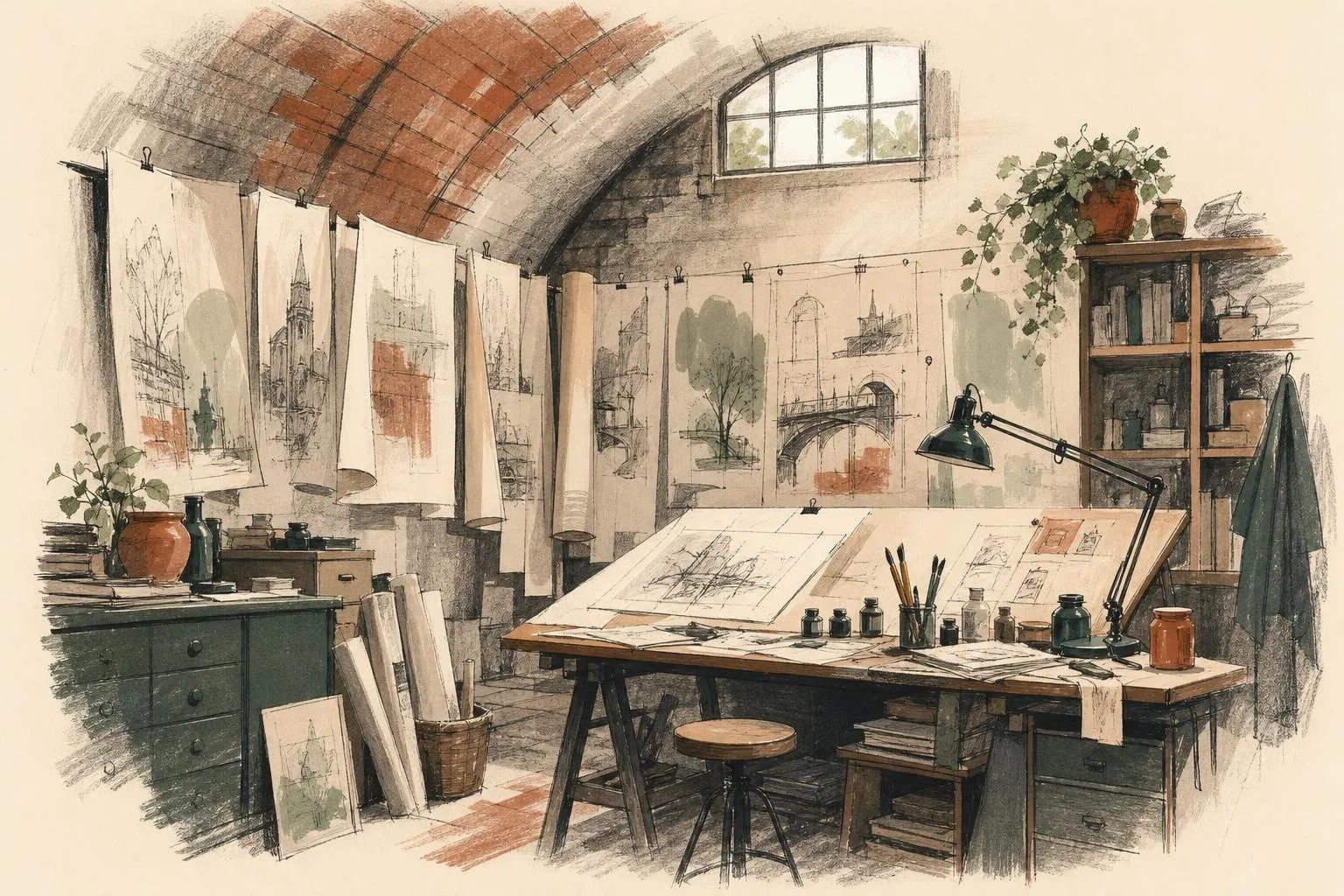
Each issue was a large sheet or set of sheets in newspaper scale, which is why it is called a broadsheet. The sheets were produced from Topolski’s studio under the railway arches by Hungerford Bridge, and they were reproduced from his on-the-spot drawings. That choice made the finished sheets look immediate and handmade. Because the drawings were made in action and were not redrawn, the print kept the speed of the original sketch, including the false starts.
The physical issues vary more than the word broadsheet suggests. Booksellers’ descriptions mention booklets as well as large sheets, and some numbers were printed in colour on coloured paper. A 1962 issue covering Nos. 22-24 of Volume 10 is a 16-page broadsheet measuring 46 x 29.5 cm folded and 46 x 59.5 cm open, with 21 images. A 1960 issue is a single double-sided sheet about 45 x 18 inches unfolded. Dealers also describe the Chronicle as independently published, with no advertisements and no subsidy.
Over the years the Chronicle grew in ambition. The aim never changed: a reporter’s record of what Topolski saw, drawn by one person. His method of working is outlined in the biography and, as a practical skill, in the guide to reportage drawing.
Subjects: from the Coronation to the sixties


The Chronicle began in the year of the Coronation, and the range that followed was wide. According to the Topolski Studio’s own account, its subjects included Martin Luther King, Mahatma Gandhi, General Douglas MacArthur, Laurence Olivier, Bob Dylan, Allen Ginsberg and Mick Jagger, as well as Bergen-Belsen, the Black Panthers, the Viet Cong and apartheid. Royal ceremony, politics and street life sat side by side, and the issues followed Topolski on his travels through Europe, Asia and America.
Many of those drawings became the starting point for panels of his larger painted work. The best example is the Memoir of the Century, the panorama begun in 1975, and the series of chapters on this site follows the same events: 1960s America, the London Blitz and others. Looking at an issue of the Chronicle beside a chapter shows how a quick drawing could be enlarged into a painting years later.
Five issues and what they contain
Catalogue records and booksellers’ listings make it possible to see what individual numbers looked like. The five below show how the numbering, format and subjects changed between the first year and the mid-sixties.
| Issue | Year | Format | What it shows |
|---|---|---|---|
| Vol. 1 No. 8 | 1953 | Early single number | One of the first-year issues, digitised by the University of Utah |
| Vol. 2 No. 5 | 1954 | Illustrated cover | Cover art reproduced in Utah's digital collection |
| Vol. 8 Nos. 15-18 | 1960 | One double-sided colour sheet, about 45 x 18 in | World population growth on one side, young Londoners marching against nuclear weapons on the other |
| Vol. 10 Nos. 22-24 | 1962 | 16-page broadsheet, 46 x 29.5 cm folded | Drawings made while painting 20 pictures with 26 portraits of English writers |
| Vol. 13 Nos. 1-6 | 1965 | Omnibus, 23 x 18 in, yellow and tan paper | Bob Dylan in rehearsal, Martin Luther King, Greenwich Village and the poetry reading at the Royal Albert Hall |
The 1965 omnibus is a good example of the Chronicle at full stretch. Its broadsheet on International Poetry at the Royal Albert Hall draws Lawrence Ferlinghetti, Allen Ginsberg, Andrei Voznesensky, Gregory Corso and Alexander Trocchi, with text by Trocchi, and sits beside American drawings in the same set. The London counterculture that grew out of events like that reading is the subject of the chapter on one hundred hippies.
The 1958 book edition
The Chronicle also reached readers between hard covers. Topolski’s Chronicle for Students of World Affairs was published in London by George G. Harrap, with drawings reproduced from the broadsheet and a text by John Roddam that adds context to each picture. The HathiTrust catalogue dates it to 1958 and records 96 pages of illustrations. A copy is held by the Wolfsonian museum at Florida International University, which featured drawings from it in a 2025 article, among them a crowded London street, a Harlem street scene and a courtroom at the Old Bailey. For a reader without access to the loose sheets, this book is the easiest way to see a selection of Chronicle drawings in one place.
Why the broadsheet form mattered
A bound book fixes a drawing into a sequence the artist chooses once. A broadsheet lets it travel as a sheet, to be pinned to a wall, folded into a bag or passed to a friend. For Topolski that mattered, because the drawings were records of events that were still fresh. Issuing them quickly, subject by subject, kept the connection between the sketch and the moment it recorded, and it gave subscribers a feeling of being near the story. The format also explains why well-kept sets are valued: a large newsprint-scale sheet does not age gracefully.
Circulation and readers
Subscribers included institutions as well as private readers, and the University of Utah’s library is the clearest example. The text for a 2023 exhibition in London puts the readership at more than 2,000 subscribers worldwide, private and institutional, and a lecture on Topolski at Gresham College gives the same order of figure. Booksellers add that museums, universities and libraries abroad were among them. For a publication that ran from a single artist’s studio, that reach was considerable. Subscribing was a way of owning an eyewitness record in instalments, and it explains why long runs survive in institutional libraries.
The run and its dates
The start date of 1953 is firm, and most accounts tie it to the Coronation of Elizabeth II, which Topolski had been commissioned to record. The end is less certain. The University of Utah’s own article on its collection gives 1953-1979, while the description attached to its digitised issues gives 1953 through 1982, and one bookseller gives 1980. The difference may come from the final regular issue and later special material.
The total number of drawings is just as hard to pin down. Published figures include about 2,300, more than 2,500 and about 3,000, depending on the source and on what is counted. Taken together they support a total of between two and three thousand drawings over roughly three decades. Where a number matters, check the source for the specific edition before quoting it.
Where copies are held today
The best documented holding is at the University of Utah. The Marriott Library there subscribed from the first issue, describes its set as nearly complete and keeps it in its Fine Arts and Architecture Library. The library calls the digitisation an ongoing project, and many issues have already been digitised and can be browsed online through Utah’s digital collections and through aggregators such as the Digital Public Library of America. Individual issues also appear in museum collections that hold Topolski’s drawings.
Because holdings differ and online records change, anyone planning to consult a physical copy should contact the library or museum first. For reading online, start with the 1953 issues: they are short, tied to events that still make recognisable subjects, and show how the format worked at the beginning.
Exhibitions of the Chronicles
The Chronicle was shown as well as posted. Accounts of Topolski’s career say the sheets were exhibited in cities including New York, Moscow and Tel Aviv and serialised in several countries. In London the most recent show devoted to them was Punks, Princes and Protests: the Chronicles of Feliks Topolski RA, held at the POSK Gallery on King Street in Hammersmith in the summer of 2023. It was curated by Dr Julia Griffin and Lucien Topolski and organised through the Granville-Skarbek Anglo-Polish Cultural Exchange. The title is a fair summary of the range: the same broadsheet could move from a royal occasion to a demonstration within a year.
Buying Topolski prints and Chronicle sheets
Chronicle sheets turn up regularly with booksellers and print dealers, and for many collectors they are the first piece of Topolski’s work on paper they own. A Chronicle sheet is a printed reproduction issued to subscribers, while an original Feliks Topolski drawing is a unique sheet in his own hand, and a listing should make clear which of the two is on offer.
When an issue is offered for sale, the useful details are the volume and issue numbers, the year, the number of pages or sides, and the condition of the central fold, since many sheets survive folded down the middle. A combined number such as Nos. 1-6 should contain every part it claims. Tinted paper and coloured inks can fade in daylight, so a sheet that has hung on a wall may be paler than one kept in a drawer. For framing, acid-free mounts and a position out of direct sun will keep newsprint-scale paper in better shape.
Using the Chronicle as a model
The Chronicle is a useful pattern for anyone who draws. Pick a subject for a month, make a sheet or two each week, add short captions, and print or photocopy the lot as a small run. A broadsheet of your own, even at A3, teaches editing: which drawings go together, which are cut, and what the headline is. It is also a way to see what one person with a pen can report.
FAQ
Questions, answered
01What was Topolski's Chronicle?
It was a broadsheet of reportage drawings that Feliks Topolski published from his studio from 1953. It was reproduced from drawings he made on the spot, it reached readers by subscription, and it ran for around three decades. Subjects ranged from civil rights leaders and the Black Panthers to Bob Dylan and the Viet Cong.
02How often was it published?
Most accounts say twice a month, which gives the figure of 24 issues a year, with breaks while Topolski travelled. In practice several numbers were often issued together, so a single sheet may carry Nos. 15-18 or Nos. 22-24 of a volume. One volume covered one year, which is why the 1962 issues belong to Volume 10.
03How was Topolski's Chronicle printed?
The sheets were reproduced from drawings Topolski made on the spot, and they were issued in newspaper-scale format, which is why the Chronicle is called a broadsheet. Records differ on the details of production, so the catalogue entry for a specific issue is the place to check paper, size and printing.
04Where can you see copies of the Chronicle?
The University of Utah's Marriott Library subscribed throughout the run, keeps the collection in its Fine Arts and Architecture Library and has digitised many issues online. Copies of individual issues also turn up in other collections. Always check a library's catalogue before requesting an item.
05Are Chronicle sheets original prints or reproductions?
They are printed reproductions of drawings, made in large numbers for subscribers, so a Chronicle sheet is not the same thing as an original drawing by Topolski. Booksellers list the sheets by volume and number, often describing them as lithographs. When buying one, check the volume and issue numbers, whether all pages are present and how the central fold has worn.
06When did the Chronicle end?
Sources disagree. Some give 1979 and others 1982 as the final year, which may reflect the last regular issue versus later special ones. Most agree that it began in 1953 and ran for about three decades.