Journal
The Drawing Journal: Sketchbook Articles on Habits and Drawing London
A drawing journal in the plainest sense: short, practical articles about keeping a sketchbook, drawing a restless city, and the places where art shows up outside the gallery.
Sketchwalk format and London drawing events checked on
Articles
-
-
-
This drawing journal is where the longer thoughts on drawing live. The main guides on the site deal with set subjects, such as how a life drawing session works, where to find life drawing in London or which London galleries cost nothing to enter. The articles here are looser and more personal in subject, though still practical: they deal with what to carry, where to stand, how to cope with a moving subject, and how art looks when it escapes the frame and lands in everyday life.
The drawing journal has three strands, and most pieces sit inside one of them. The sections below describe each, with links to the articles that currently belong to it.
Sketchbook habits
A sketchbook does its job only when it is used, and most of the problems drawers face are about use, not talent. The books that fill up are small, cheap enough not to feel precious, and carried everywhere. Pages that look unimpressive on their own add up to a record of looking that is worth more than a few polished pictures.
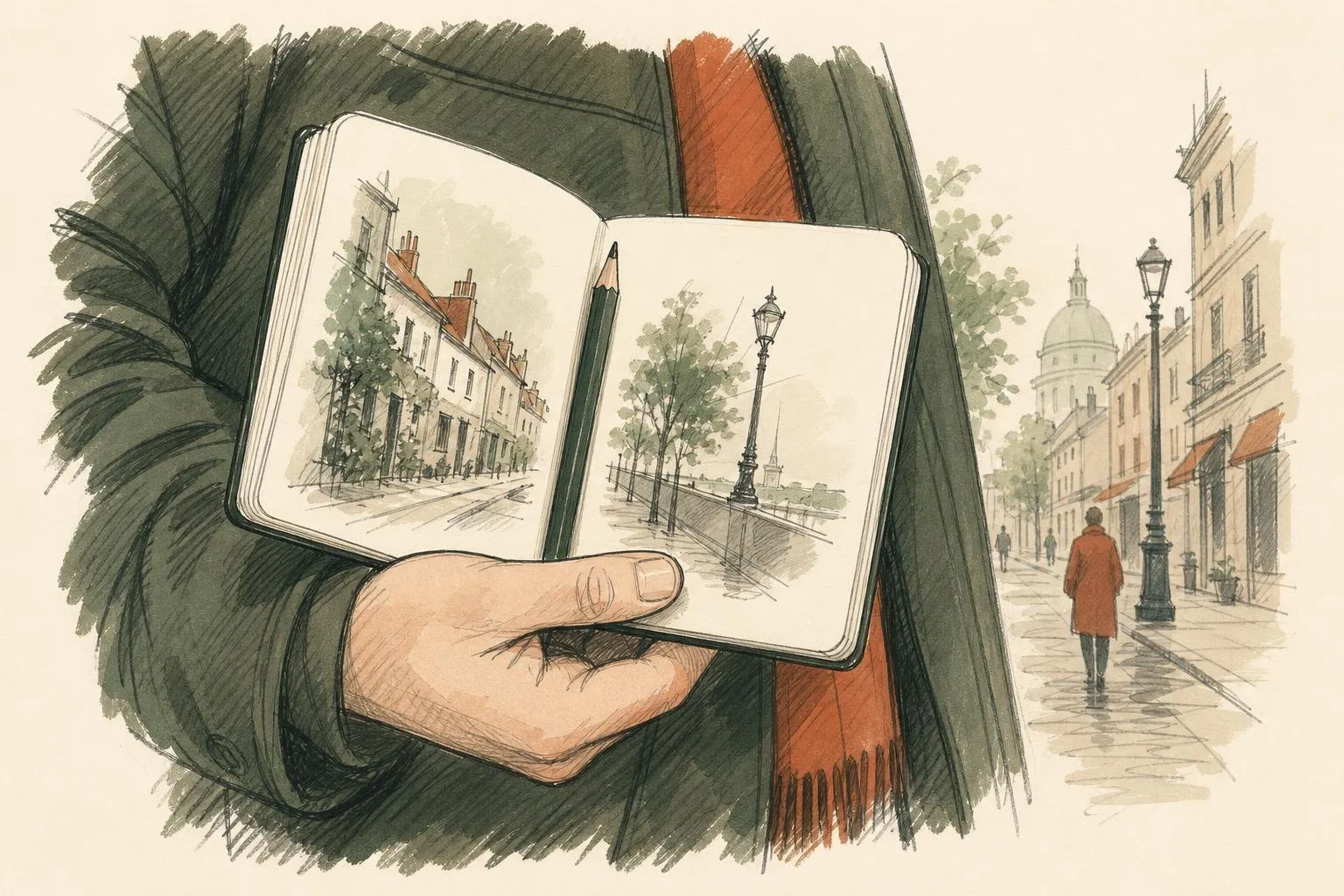
The first article in this strand is how to keep a pocket sketchbook. It covers the size of book, the choice of pencil and pen, how to build a daily habit that survives a busy week, and what to do with pages you dislike. It is the one to read first if you have a blank notebook on a shelf and have never made a mark in it.
Related reading outside the journal includes the page on life drawing sessions in London, which suits readers who want the same habit with a live model in a room.
Sketchbook ideas for the days you are stuck
Most blank weeks come from not knowing what to draw, so a short list of standing subjects helps. Draw the same view from your window once a week and date each page. Draw your breakfast table before you clear it. Fill a page with hands only, yours and other people’s on the train. Draw one object in three minutes, then again in thirty seconds, and compare the two. Copy a single figure from a painting in a free gallery, then draw a real person in the same pose on the way home.
A drawing journal also works as a diary. Write the date, the place and one line of what you heard beside each sketch. After a month the words make the pages easier to read back, and they are the same habit reportage artists use when they add names and quotes to a sheet. A one sketch a day journal needs nothing more than a small book and a rule that a two-minute drawing still counts.
Drawing London
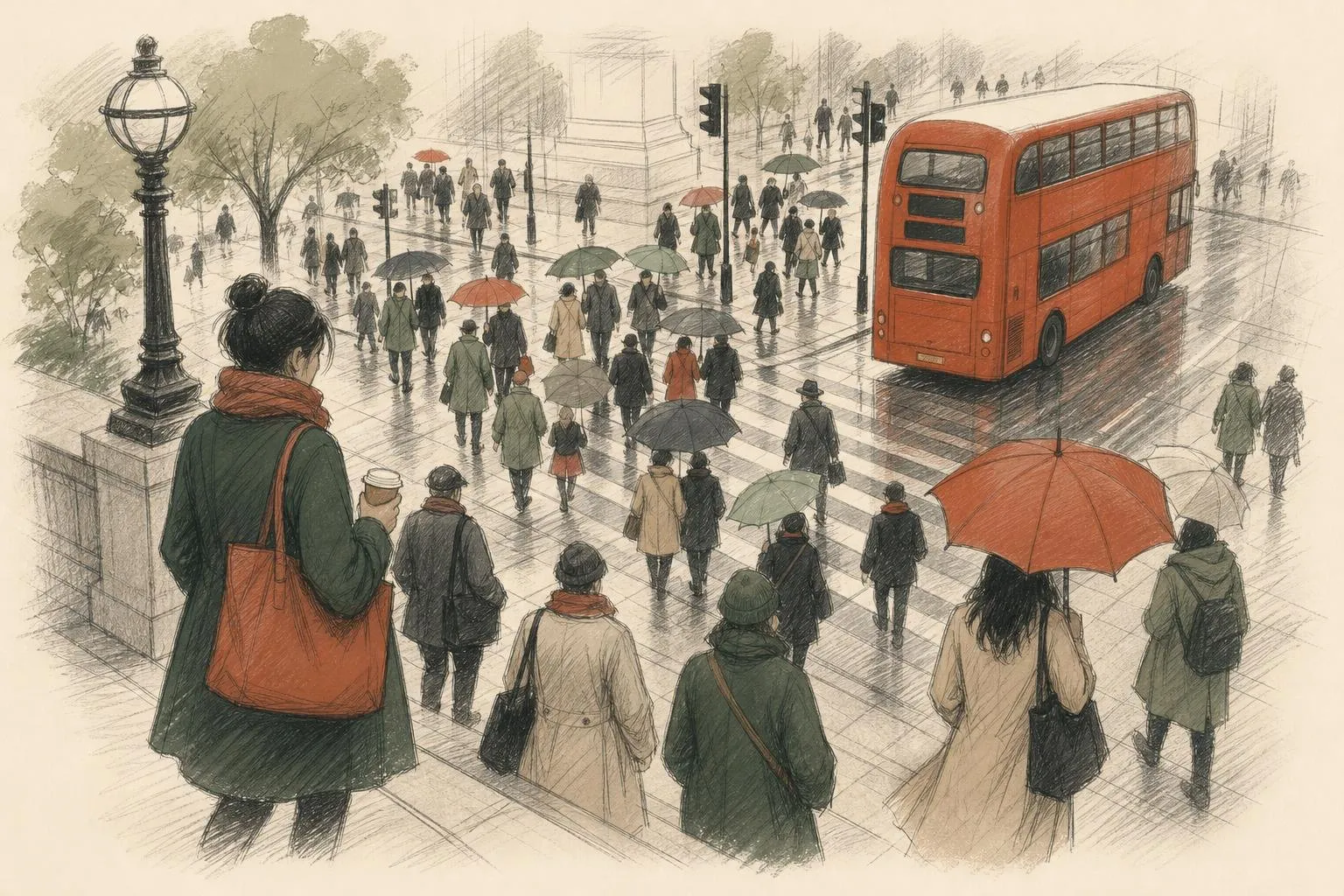
London is a hard city to draw and a good one. Nothing stays put: buses pull out of frame, pedestrians cross in a stream, and the river changes with the tide and the light. The second strand of the journal is about turning that movement into material. The central piece is drawing a city that won’t sit still, a practical article on crowds, vehicles and river views, with notes on where in the city these subjects are easiest to find.
The approach rests on an old tradition of reportage drawing, in which artists produce fast, honest sketches on location and finish them later. The profile of the twentieth-century reportage artist Feliks Topolski, covered elsewhere on this site, is a good entry to that tradition; the reportage drawing page describes how the method works in practice.
A third thread concerns the places where London drawers go for free. The guide to free museums in London lists the galleries and collections that let you in without a ticket, and the Tate Modern visitor guide goes deeper on the largest of them. These sit in the main guides rather than the journal, but they are the natural next step after a journal article about drawing out and about.
Sketching with a group in London
Drawing alone in public is what puts many beginners off, and drawing in a group takes away much of that self-consciousness. Urban Sketchers London, the local chapter of the international Urban Sketchers network, organises a sketchwalk every month. Its own guidance is short: arrive at 11am to meet the organisers, draw London on location from direct observation, and return to the starting point before 1pm and before 3.30pm for the throwdown, where everyone lays out their sketchbooks and compares the morning’s work. It is free, no registration is needed, and the kit list is a sketchbook, your usual tools and perhaps a folding stool. Skill level does not matter.
A few annual events give the city extra subjects. The dates below are worth a note in the diary.
| When | Event | Why it suits a sketchbook |
|---|---|---|
| Monthly | Urban Sketchers London sketchwalk | Free group drawing on location, with a sharing session at the end |
| September | Totally Thames | A month of events on and along the river, which has included a riverside sketchwalk |
| Mid-September | Open House Festival | Buildings that are normally closed open to visitors for about nine days |
| October | The Big Draw Festival | Drawing events at hundreds of venues across the UK and beyond |
The charity behind the Big Draw was founded in 2000 by the Guild of St George, and the first Big Draw was a single day of events in October that year; it now runs through the whole month. Open House is organised by Open City. Venues and booking rules change every year, so check each organiser’s site for the current programme.
Cut paper: the wycinanki tradition
Not every London drawing event uses a pencil. Wycinanki (said roughly “vee-chin-non-ki”) is the Polish folk art of cut paper: symmetrical flowers, birds and stars cut from coloured sheets and often layered. In December 2010 a free drop-in workshop called Wycinanki Wonderland, run by the trio Kotki Dwa with backing from the Polish Cultural Institute, showed Londoners how to cut their own festive designs for cards and decorations. The craft is worth trying for anyone who draws. Cutting a shape forces the same decisions about silhouette and negative space as a fast contour drawing, so a few sheets of coloured paper and small scissors make a useful break from the sketchbook.
Art in popular culture
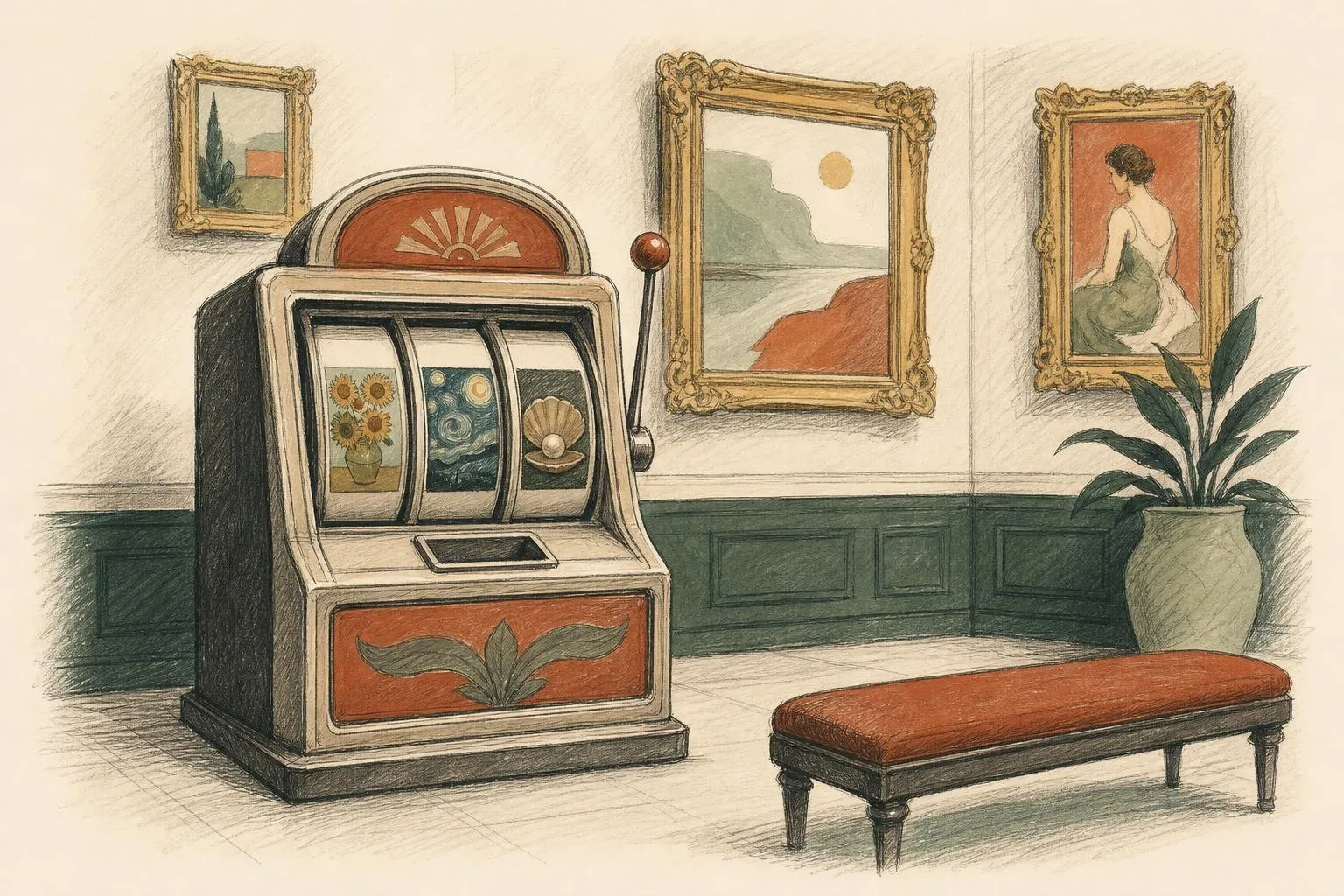
Art does not stay in galleries. It turns up in films, games, packaging, music videos and the visual design of entertainment. The journal keeps a small corner for pieces that look at those crossings with an editor’s eye and a measure of scepticism. One example is an article on slot games inspired by classic art, which looks at how famous paintings and artists are used as themes in art-themed slot games.
That article opens with the point in one breath: art-themed slots are gaining traction in the online casino world, combining cultural heritage with the thrill of gaming, and you can find these games at some of the best slot sites in the UK.
The point of these pieces is observation, not endorsement: how artists’ work is borrowed, what is lost or kept in the translation, and what the borrowing says about how widely recognisable certain pictures have become. Readers who want to draw from this kind of material can treat it as a source of subjects, since stylised pictures are good practice for simplifying shapes.
How to use the drawing journal
The articles are meant to be short enough to read on a train and specific enough to try the same day. A reasonable routine is to read one, pick a single idea from it, and test it for a week before moving to the next. Reading everything at once and changing five habits together is a reliable way to abandon all of them.
Where an article gives a recommendation, such as a pencil grade or a viewing spot, it tries to say why and what to do if the suggestion does not suit you. Facts about places, including opening arrangements and admission rules, change, so the articles point you to the venue’s own page for the current detail.
Anyone who spots an error is invited to say so; the about page explains how corrections are handled and how pieces are checked and revised.
Where to begin
Readers who draw rarely should start with the pocket sketchbook article and a week of small sketches. Readers who already draw daily will probably find the London piece more useful, since it deals with the specific difficulty of subjects that move. Readers who mostly look at art can start with the guide to free museums and bring a pencil on the next visit.
Pick one article and one pencil, and begin with the first page of the book you have in the bag.
FAQ
Questions, answered
01What does the journal cover?
It covers three strands: the practice of keeping a sketchbook, the problems of drawing a busy city such as London, and art in popular culture, including art-themed entertainment. Articles are written to be used, with concrete kit lists, places and routines, and each one links to related guides.
02How often are articles added?
There is no fixed schedule. Articles appear when there is something specific to say, and existing ones are reread and corrected when facts change, such as museum policies or kit that has gone out of production. The page dates and corrections are handled in the text itself.
03Are the articles for beginners?
Mostly yes, though experienced drawers pick up kit and location ideas as well. Nothing assumes training. Where a technique needs a prerequisite, the article names it and points to the relevant guide, for example the pages on life drawing or on free galleries in London.
04Where can I sketch with other people in London for free?
Urban Sketchers London runs monthly sketchwalks that are free and need no registration. The usual pattern is to meet at 11am, draw on location, and come back to the start for a sharing session before 1pm and again before 3.30pm. Dates and meeting points are posted on the chapter's events calendar and social channels, so check there before setting out.
05Can readers suggest corrections?
Corrections are welcome. The about page explains how the publication handles research and updates, and it is the place to start if you spot an out-of-date opening time or an error in a date or a name.